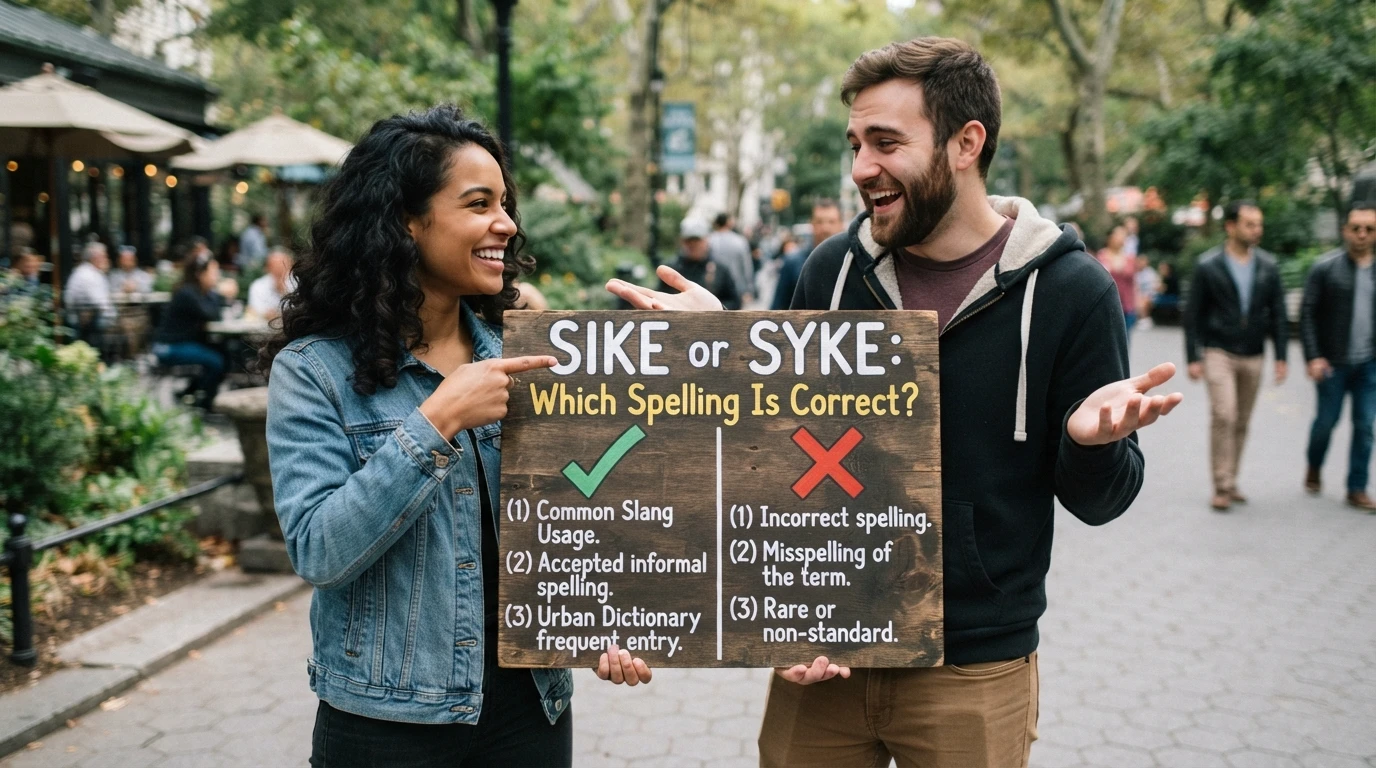
Sike or syke is a common spelling question, especially among people who use slang on social media, in text messages, or in casual conversations. The term is often used after a joke, prank, or misleading statement to let others know that what was just said wasn’t serious. Because the word is informal and has been passed around through speech, memes, and internet culture, many people are unsure whether “sike” or “syke” is the correct spelling. Understanding the difference can help you avoid confusion and use the term more accurately in everyday communication. In this guide, we’ll explore the meanings of sike and syke, identify the most widely accepted spelling, and explain how the expression became popular.
Have you ever seen someone write “sike” or “syke” after making a joke and wondered which spelling is correct? You’re not alone. These words are commonly used online, in text messages, social media posts, and casual conversations to signal that a statement was meant as a joke or trick.
People search for sike or syke because both spellings appear frequently on the internet. This creates confusion about whether one is correct, whether both are acceptable, or if they have different meanings. Since slang terms often develop through spoken language before appearing in writing, multiple spellings can emerge over time.
The good news is that there is a clear answer. While both forms are seen online, sike is generally considered the standard and more widely accepted spelling. Syke exists as an alternative spelling, but it is less common. This guide explains the difference, origin, usage examples, common mistakes, popularity trends, and which spelling you should use.
Sike or Syke – Quick Answer
The quick answer is:
✅ Sike = Standard and most common spelling
⚠️ Syke = Alternative spelling sometimes used online
Meaning of Sike
Sike is a slang expression used to show that a previous statement was not serious or was intended as a joke.
Examples
- “I bought you a new car. Sike!”
- “We’re getting a day off tomorrow. Sike!”
- “I finished the project already. Sike, I’m still working on it.”
Comparison Table
| Spelling | Status | Common Usage |
| Sike | Most common | Yes |
| Syke | Alternative spelling | Less common |
The Origin of Sike or Syke
Origin of Sike
The slang term sike became popular in American English during the late twentieth century. It was often used after a joke, prank, or misleading statement.
The expression is believed to have evolved from the phrase “psych!”, meaning “I fooled you” or “I tricked you.”
How Syke Appeared
As slang spread online, many people began spelling the word based on how it sounds rather than how it originated. This led to alternative spellings such as syke.
Why Multiple Spellings Exist
Unlike formal English words, slang develops informally. Different groups may spell the same spoken word differently.
British English vs American English Spelling
This is not a traditional British versus American spelling difference.
Both British and American users may write:
- Sike
- Syke
- Psych
However, sike is generally the most recognizable slang spelling.
Comparison Table
| Region | Common Spelling |
| United States | Sike |
| United Kingdom | Sike |
| Canada | Sike |
| Australia | Sike |
Key Point
There is no official regional spelling rule. Usage depends on internet culture and personal preference.
Which Spelling Should You Use?
Use Sike If:
- You want the most common spelling.
- You are writing casual social media content.
- You want readers to immediately recognize the slang.
Use Syke If:
- You prefer the alternative spelling.
- Your audience commonly uses it.
Professional Advice
Because both forms are slang, neither is appropriate for:
- Academic writing
- Business reports
- Formal emails
- Professional documents
For formal situations, avoid both spellings.
Common Mistakes with Sike or Syke
Mistake 1: Using Them in Formal Writing
❌ The company announced layoffs. Sike.
✅ Use clear professional language instead.
Mistake 2: Assuming Syke Is the Standard Form
While common online, syke is generally less accepted than sike.
Mistake 3: Confusing Sike with Psych
The slang originated from psych, but modern usage often prefers sike.
Mistake 4: Using the Term in Serious Contexts
The word signals humor or deception, which may confuse readers in formal communication.
Sike or Syke in Everyday Examples
Text Message Example
“Guess what? I won the lottery. Sike!”
Social Media Example
“I woke up at 5 a.m. to exercise. Sike, I went back to sleep.”
Casual Conversation Example
“We have no homework tonight. Sike!”
Meme Example
Many internet memes use “sike” to reveal a joke or unexpected twist.
Sike or Syke – Google Trends & Usage Data
Search interest for sike or syke usually comes from:
- Social media users
- Students
- Gamers
- Internet culture discussions
Popular Search Queries
- Sike meaning
- Syke meaning
- Sike vs syke
- How do you spell sike?
- Is Syke correct?
Usage Trend
The spelling sike generally appears more frequently in online discussions, slang dictionaries, and internet content.
Popular Contexts
- Text messages
- TikTok comments
- Instagram captions
- Memes
- Online gaming chats
Sike vs Syke Comparison Table
| Feature | Sike | Syke |
| Common Online Usage | High | Moderate |
| Standard Slang Spelling | Yes | No |
| Informal Writing | Yes | Yes |
| Formal Writing | No | No |
| Social Media Usage | Very Common | Common |
| Reader Recognition | High | Moderate |
| Recommended Choice | Yes | Usually No |
FAQs
Which is correct, sike or syke?
Sike is generally considered the more common and accepted spelling.
What does sike mean?
It means that a previous statement was a joke, prank, or trick.
Is syke wrong?
Not necessarily. It is an alternative spelling, but it is less common than sike.
Where did sike come from?
It developed from the slang expression “psych,” which means “I fooled you.”
Can I use sike in professional writing?
No. It is considered informal slang.
Is sike still popular?
Yes. It remains common on social media, in memes, and in casual conversations.
What is the original spelling?
The original expression is generally linked to “psych,” but “sike” became the dominant slang spelling.
Conclusion:
When comparing sike or syke, the safer and more widely recognized choice is sike. Although both spellings appear online, sike has become the standard version used across social media, text messages, memes, and casual conversations. The term is commonly used to reveal that a previous statement was a joke, prank, or playful deception.
The alternative spelling syke is not necessarily wrong, but it is less common and may not be recognized as quickly by readers. Since both forms are informal slang, they should be avoided in professional, academic, or business writing.
If your goal is clarity and broad recognition, use sike. It is the spelling most people expect and understand. Whenever you’re deciding between sike or syke, remember that sike remains the preferred choice for modern informal communication.

I am Oliver Bennett is the founder and writer behind Grammlii.com, where he shares insightful content on language, meanings, expressions, and effective communication. Passionate about making knowledge simple and accessible, he helps readers explore words, ideas, and their deeper significance.