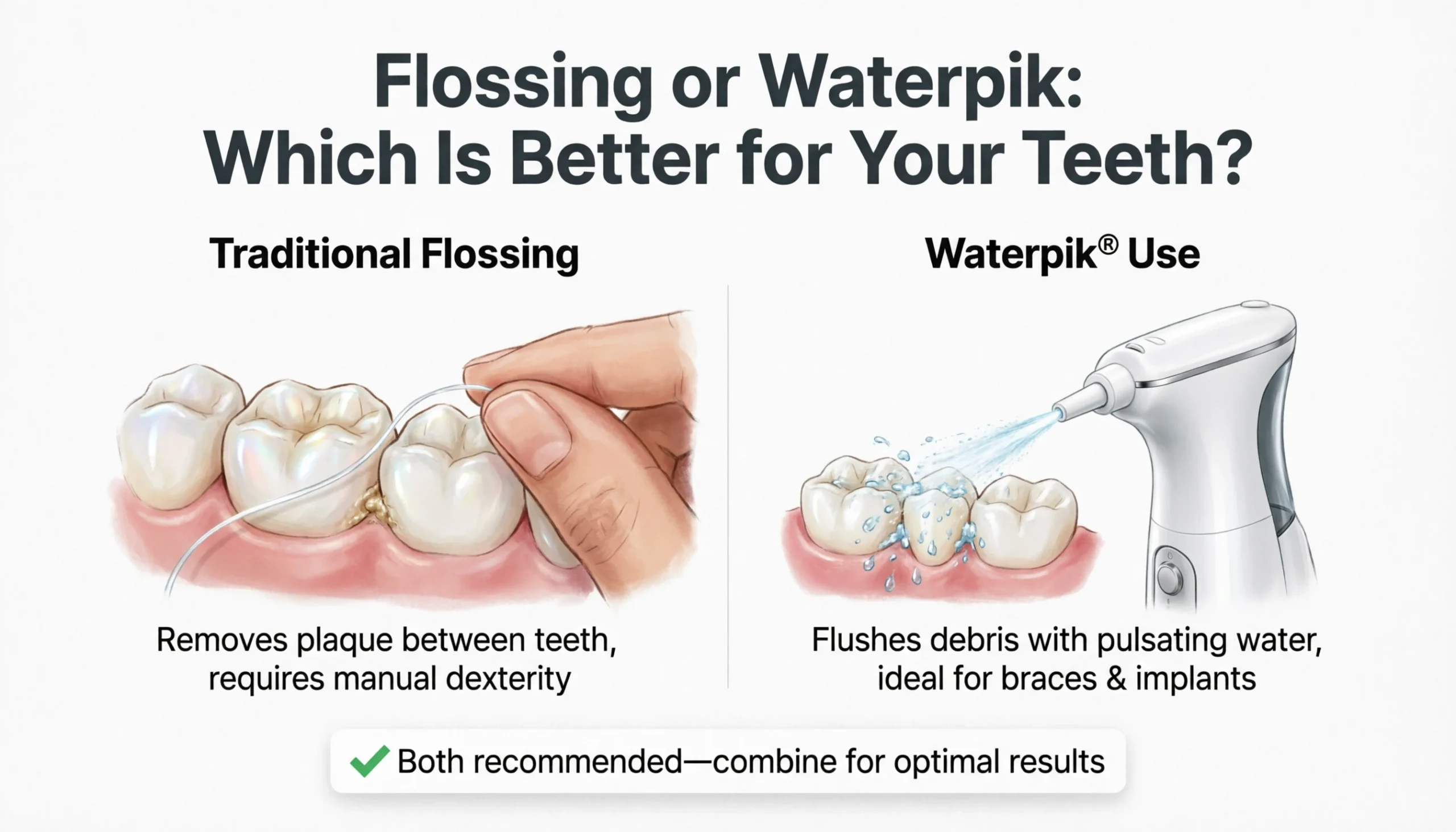
Flossing or Waterpik is a common comparison for people looking to improve their daily oral hygiene routine. Both methods are designed to remove food particles and plaque from between the teeth and along the gumline, helping reduce the risk of cavities and gum disease. Traditional dental floss has long been recommended by dentists, while a Waterpik (water flosser) uses a pressurized stream of water to clean hard-to-reach areas. Each option offers unique advantages, and the best choice often depends on your dental needs, lifestyle, and personal preference. In this guide, we’ll compare flossing and Waterpik, explain how each works, discuss their benefits and limitations, and help you decide which method is best for maintaining a healthy smile.
If you’re comparing flossing and Waterpik, you’re probably looking for the best way to keep your teeth and gums healthy. Both methods are designed to clean between teeth where a toothbrush can’t reach, but they work differently. Traditional floss physically removes plaque and food particles, while a Waterpik uses a stream of pressurized water to clean between teeth and along the gumline.
People search for flossing or Waterpik because they want to know which option is more effective, easier to use, and better for braces, dental implants, or sensitive gums. Many also wonder whether a Waterpik can completely replace traditional floss.
The answer isn’t always one-size-fits-all. Both methods have benefits, and the best choice depends on your oral health, dental work, personal preference, and your dentist’s recommendations. This guide compares flossing and Waterpik devices, explains their differences, and helps you decide which option best fits your dental care routine.
Flossing or Waterpik – Quick Answer
The quick answer is:
- Traditional flossing is highly effective at physically removing plaque between teeth.
- A Waterpik (water flosser) uses a targeted stream of water to remove food debris and help clean below the gumline.
Many dentists recommend using a Waterpik as a helpful addition to oral hygiene, especially for people with braces, implants, or gum concerns. For some people, a Waterpik may be an alternative when traditional flossing is difficult, but it’s best to follow your dentist’s advice.
Examples
- Someone with healthy teeth may use traditional floss daily.
- A person with braces may find a Waterpik easier to use around brackets and wires.
Comparison Table
| Feature | Traditional Floss | Waterpik |
| Removes Plaque | Excellent | Very Good |
| Removes Food Debris | Excellent | Excellent |
| Easy Around Braces | Moderate | Excellent |
| Gumline Cleaning | Excellent | Excellent |
| Beginner Friendly | Moderate | Excellent |
The Origin of Flossing or Waterpik
About Traditional Flossing
Dental floss has been recommended for decades to clean the tight spaces between teeth where toothbrushes cannot reach.
About Waterpik
Waterpik is a well-known brand of water flossers that uses pressurized water to clean between teeth and below the gumline. The name is often used generically to refer to water flossers.
Why People Compare Them
Both methods help:
- Remove food particles
- Improve gum health
- Reduce plaque buildup
- Support daily oral hygiene
- Reach areas missed by brushing
Flossing vs Waterpik Features
Traditional Floss Strengths
- Physically scrapes plaque from tooth surfaces
- Inexpensive
- Portable
- No electricity required
- Recommended in many oral hygiene routines
Waterpik Strengths
- Easy to use
- Comfortable for sensitive gums
- Excellent for braces
- Helpful around implants and bridges
- Reaches below the gumline with water pressure
Comparison Table
| Category | Traditional Floss | Waterpik |
| Plaque Removal | Excellent | Very Good |
| Ease of Use | Moderate | Excellent |
| Braces | Moderate | Excellent |
| Dental Implants | Good | Excellent |
| Sensitive Gums | Moderate | Excellent |
Which Should You Choose?
The best choice depends on your dental needs.
Choose Traditional Floss If:
- Your teeth are closely spaced.
- You want to physically remove plaque.
- You prefer a low-cost option.
- You have a good flossing technique.
Choose a Waterpik If:
- You wear braces.
- You have dental implants or bridges.
- Your gums are sensitive.
- You find traditional floss difficult to use.
Patient-Based Recommendation
| Situation | Best Choice |
| Healthy Teeth | Traditional Floss |
| Braces | Waterpik |
| Dental Implants | Waterpik |
| Sensitive Gums | Waterpik |
| Maximum Cleaning | Both (if recommended by your dentist) |
Common Mistakes with Flossing or Waterpik
Mistake 1: Skipping Cleaning Between Teeth
Brushing alone doesn’t clean all tooth surfaces.
Mistake 2: Using Floss Incorrectly
Improper flossing may miss plaque or irritate the gums.
Mistake 3: Assuming a Waterpik Works Exactly Like Floss
Water flossers and traditional floss clean differently and may provide different benefits.
Mistake 4: Flossing Too Aggressively
Gentle technique helps protect your gums.
Mistake 5: Ignoring Regular Dental Checkups
Daily cleaning should be combined with routine professional dental care.
Flossing or Waterpik in Everyday Examples
Family Example
“Our dentist suggested using a Waterpik while my child has braces.”
Daily Routine Example
“I floss every evening before brushing my teeth.”
Orthodontic Example
“A Waterpik makes cleaning around braces much easier.”
Dental Visit Example
“My hygienist reviewed both flossing and water flossing techniques.”
Flossing or Waterpik – Google Trends & Usage Data
Interest in flossing or Waterpik continues to grow as more people invest in home dental care.
Popular Search Queries
- Flossing vs Waterpik
- Is Waterpik better than floss?
- Water flosser benefits
- Best way to clean between teeth
- Waterpik for braces
Common Search Intent
Users want to compare:
- Effectiveness
- Gum health
- Plaque removal
- Ease of use
- Cost
Popular Audiences
- Adults
- Orthodontic patients
- Parents
- People with implants
- Oral health enthusiasts
Flossing vs Waterpik Comparison Table
| Feature | Traditional Floss | Waterpik |
| Daily Cleaning | Yes | Yes |
| Removes Plaque | Excellent | Very Good |
| Removes Food Particles | Excellent | Excellent |
| Best for Braces | Good | Excellent |
| Easy for Beginners | Moderate | Excellent |
| Portable | Excellent | Moderate |
| Best Choice | Depends on Individual Needs | Depends on Individual Needs |
FAQs
Which is better, flossing or Waterpik?
Both are effective. Traditional floss is excellent for physically removing plaque, while a Waterpik is especially helpful for cleaning around braces, implants, and sensitive gums.
Can a Waterpik replace flossing?
For some people, a Waterpik may be a suitable alternative when traditional flossing is difficult. However, follow your dentist’s recommendation, as individual needs vary.
Is a Waterpik good for braces?
Yes. Water flossers are often recommended because they make cleaning around brackets and wires easier.
Which removes more plaque?
Traditional floss directly scrapes plaque from tooth surfaces, while a Waterpik helps flush away debris and bacteria. Each has unique strengths.
Is flossing still necessary?
Many dental professionals continue to recommend cleaning between teeth daily. The best method depends on your oral health and your dentist’s advice.
Can people with sensitive gums use a Waterpik?
Yes. Many people find water flossers comfortable for sensitive gums because the water pressure can often be adjusted.
Should I use both?
Some dentists recommend using both methods for certain patients, particularly those with braces, implants, or periodontal concerns. Ask your dentist what is best for your situation.
Conclusion:
In conclusion, flossing or Waterpik are both methods that can play an important role in maintaining healthy teeth and gums. Traditional floss remains an effective way to remove plaque from between teeth, while a Waterpik offers an easy and comfortable way to clean around braces, dental work, and along the gumline.
The right choice depends on your oral health needs, daily routine, and personal preference. If you struggle with traditional floss or have orthodontic appliances, a Waterpik may make cleaning easier. On the other hand, many people continue to benefit from traditional flossing as part of their daily oral hygiene routine.
For the best results, brush twice a day, clean between your teeth every day using the method recommended by your dentist, and schedule regular dental checkups. Consistent oral care is more important than choosing one method over the other.

I am Oliver Bennett is the founder and writer behind Grammlii.com, where he shares insightful content on language, meanings, expressions, and effective communication. Passionate about making knowledge simple and accessible, he helps readers explore words, ideas, and their deeper significance.