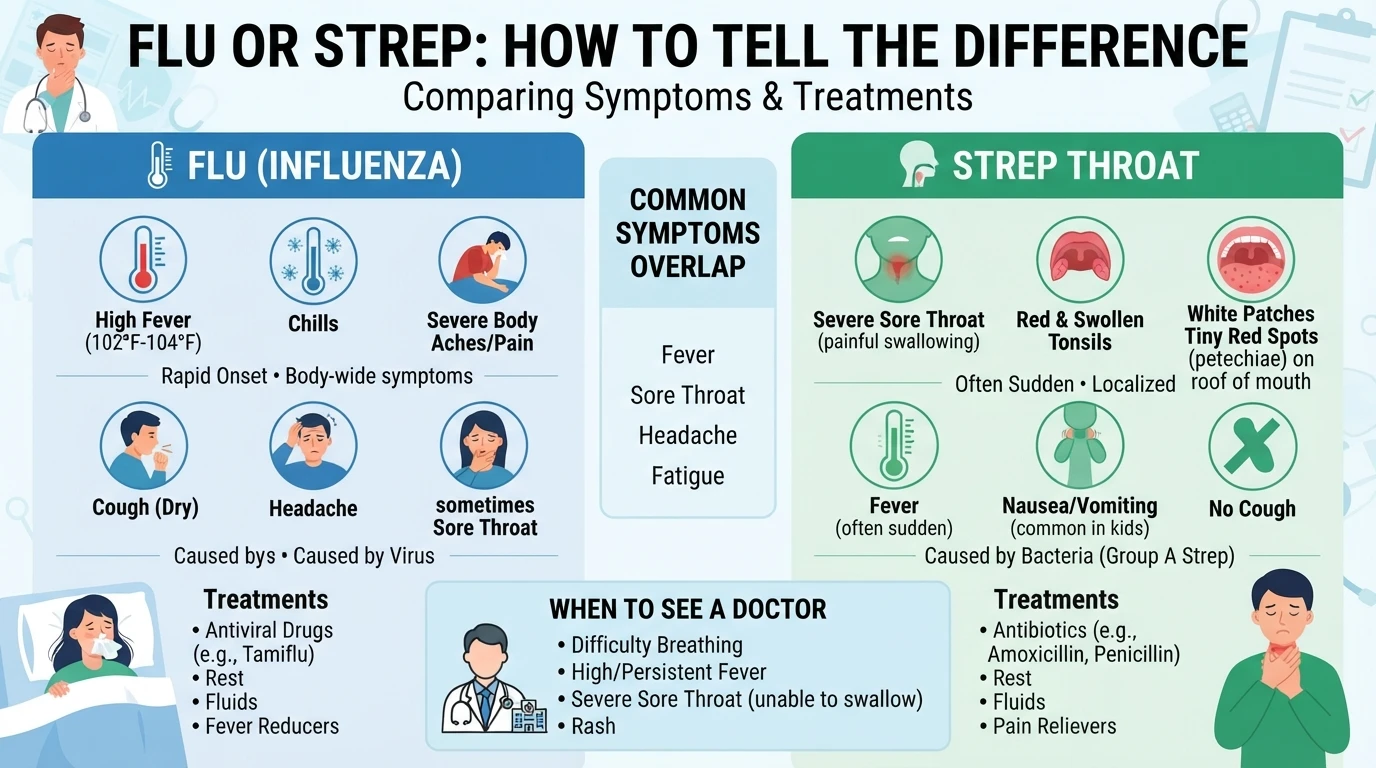
Flu or strep is a common question when symptoms such as fever, sore throat, body aches, and fatigue appear. Because influenza (the flu) and strep throat can share similar symptoms, it can be difficult to determine which illness is making you feel sick. However, these conditions have different causes, treatments, and potential complications. The flu is caused by a virus, while strep throat results from a bacterial infection, making an accurate diagnosis important for proper care. Understanding the key differences between flu and strep can help you recognize symptoms, know when to seek medical attention, and take the appropriate steps toward recovery. In this guide, we’ll compare flu and strep, explain their symptoms, and discuss available treatment options.
If you’re wondering about flu or strep, you’re probably trying to figure out what’s causing symptoms such as a sore throat, fever, body aches, or fatigue. Because both illnesses can make you feel miserable and share some similar symptoms, many people struggle to tell them apart.
People search for flu or strep because they want a quick answer about which illness they might have, whether they need medical treatment, and how serious their symptoms could be. While both conditions can cause fever and throat discomfort, they are caused by different germs and often require different treatment approaches.
The flu is a viral infection that affects the respiratory system, while strep throat is a bacterial infection caused by Group A Streptococcus bacteria. Knowing the difference can help you understand when to seek medical care and what treatment may be appropriate. This guide explains the symptoms, causes, diagnosis, treatment options, and key differences between flu and strep throat.
Flu or Strep – Quick Answer
The quick answer is:
- Flu is a viral infection that commonly causes fever, body aches, fatigue, cough, and chills.
- Strep throat is a bacterial infection that mainly causes a severe sore throat, fever, and swollen lymph nodes.
Examples
- A person with a cough, body aches, and fatigue may have the flu.
- A person with a sudden, severe sore throat and no cough may have strep throat.
Comparison Table
| Symptom | Flu | Strep Throat |
| Fever | Common | Common |
| Sore Throat | Sometimes | Very Common |
| Cough | Common | Rare |
| Body Aches | Common | Sometimes |
| Fatigue | Common | Sometimes |
| Swollen Tonsils | Less Common | Common |
The Origin of Flu or Strep
What Is the Flu?
The flu, short for influenza, is caused by influenza viruses. It spreads through respiratory droplets when infected people cough, sneeze, or talk.
What Is Strep Throat?
Strep throat is caused by the Group A Streptococcus bacteria. It spreads through close contact and respiratory droplets.
Why People Confuse Them
Both illnesses can cause:
- Fever
- Sore throat
- Headache
- General discomfort
However, their causes and treatments are different.
Flu vs Strep Symptoms
Common Flu Symptoms
- Fever
- Chills
- Cough
- Body aches
- Fatigue
- Runny nose
- Headache
Common Strep Symptoms
- Severe sore throat
- Pain when swallowing
- Fever
- Swollen lymph nodes
- Red or swollen tonsils
- White patches on the tonsils
Comparison Table
| Symptom | Flu | Strep |
| Runny Nose | Common | Rare |
| Cough | Common | Rare |
| Body Aches | Common | Mild |
| Swollen Tonsils | Rare | Common |
| White Tonsil Patches | Rare | Common |
| Fatigue | Common | Moderate |
Which Condition Might You Have?
Signs That Suggest Flu
- You have a cough.
- You have body aches.
- You feel extremely tired.
- You have congestion or a runny nose.
Signs That Suggest Strep
- Severe sore throat.
- Painful swallowing.
- Swollen neck glands.
- No cough.
- White patches on the tonsils.
Important Note
Only a healthcare professional can diagnose strep throat with certainty, often using a rapid strep test or throat culture.
Common Mistakes with Flu or Strep
Mistake 1: Assuming Every Sore Throat Is Strep
Many sore throats are caused by viruses, including the flu.
Mistake 2: Using Antibiotics for the Flu
Antibiotics do not treat viral infections such as influenza.
Mistake 3: Ignoring Severe Symptoms
High fever, difficulty breathing, or dehydration require prompt medical attention.
Mistake 4: Self-Diagnosing
Symptoms overlap, making professional evaluation important.
Mistake 5: Returning to Work or School Too Early
Both illnesses can spread to others.
Flu or Strep in Everyday Examples
School Example
“A student stayed home because doctors suspected strep throat.”
Workplace Example
“Several employees missed work due to the flu.”
Family Example
“The child developed a sore throat and fever, so the parents scheduled a medical appointment.”
Healthcare Example
“The doctor performed a rapid strep test to confirm the diagnosis.”
Flu or Strep – Google Trends & Usage Data
Searches for flu or strep increase during the cold and flu season.
Popular Search Queries
- Flu vs strep throat
- Do I have the flu or strep?
- Strep symptoms
- Flu symptoms
- Sore throat, flu, or strep
Common Search Intent
Users want to know:
- Which illness might they have
- Whether antibiotics are needed
- When to see a doctor
- How symptoms differ
Peak Search Periods
- Fall
- Winter
- Early spring
Flu vs Strep Comparison Table
| Feature | Flu | Strep Throat |
| Cause | Virus | Bacteria |
| Antibiotics Effective | No | Yes |
| Cough | Common | Rare |
| Runny Nose | Common | Rare |
| Severe Sore Throat | Sometimes | Common |
| Body Aches | Common | Less Common |
| Rapid Test Available | Yes | Yes |
FAQs
What is the main difference between flu and strep?
The flu is caused by a virus, while strep throat is caused by bacteria.
Can the flu cause a sore throat?
Yes. A sore throat is a common flu symptom.
Does strep throat usually cause a cough?
No. A cough is uncommon with strep throat.
Do antibiotics treat the flu?
No. Antibiotics do not work against influenza viruses.
How is strep throat diagnosed?
Healthcare providers often use a rapid strep test or throat culture.
Can adults get strep throat?
Yes. Both children and adults can develop strep throat.
When should I see a doctor?
Seek medical attention if symptoms are severe, persistent, or if you have difficulty breathing, swallowing, or staying hydrated.
Conclusion:
When comparing flu or strep, the most important difference is the cause of the illness. The flu is a viral infection that commonly causes fever, body aches, cough, fatigue, and respiratory symptoms. Strep throat is a bacterial infection that usually causes a severe sore throat, fever, swollen lymph nodes, and painful swallowing.
Although some symptoms overlap, signs such as a cough and body aches often point toward the flu, while a sudden severe sore throat without a cough may suggest strep throat. Because treatment differs significantly, obtaining an accurate diagnosis is important, especially if symptoms worsen or fail to improve.
If you’re unsure whether you’re dealing with the flu or strep, consult a healthcare professional for proper testing and guidance. Early evaluation can help ensure appropriate treatment and reduce the risk of complications.

I am Oliver Bennett is the founder and writer behind Grammlii.com, where he shares insightful content on language, meanings, expressions, and effective communication. Passionate about making knowledge simple and accessible, he helps readers explore words, ideas, and their deeper significance.