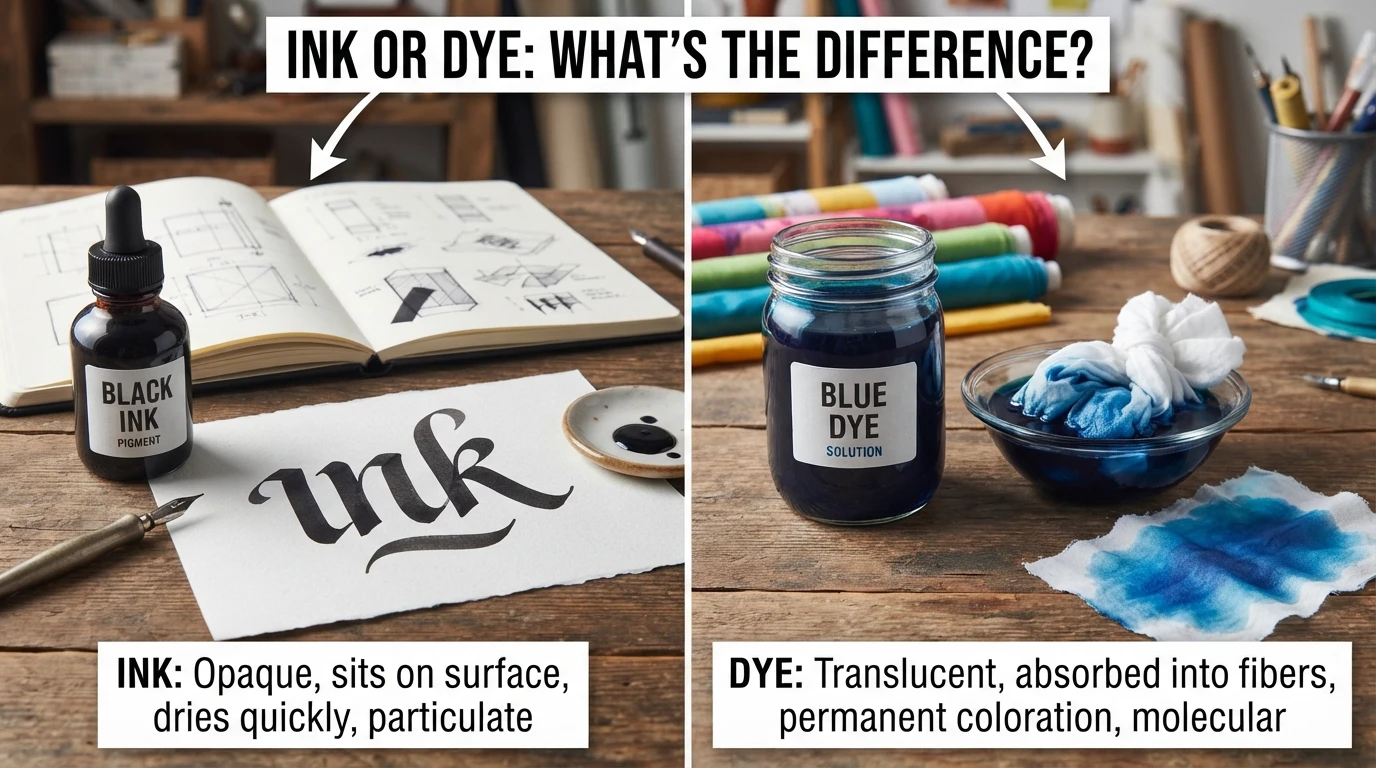
Ink or dye is a common comparison for artists, printers, crafters, and anyone working with coloring materials. Although the two terms are sometimes used interchangeably, ink and dye are not the same. Ink is typically formulated for writing, printing, and drawing, while dye is designed to color materials such as fabric, paper, leather, and hair by bonding with the material itself. Understanding the differences between ink and dye is important because each has unique properties, applications, durability, and performance. Choosing the right one depends on your project, the surface you’re working with, and the results you want to achieve. In this guide, we’ll compare ink and dye, explain how they differ, and help you decide which option is best for your specific needs.
If you’re comparing ink or dye, you’re probably trying to understand which one is better for printing, coloring, crafting, fabric projects, or artistic work. They have different compositions, purposes, and applications.
People search for ink or dye because they want to know which option produces better color, lasts longer, works on specific materials, or is best for a particular project. Whether you’re printing documents, dyeing fabric, creating artwork, or learning about colorants, understanding the difference can help you choose the right product.
This guide explains their differences, origins, uses, examples, and how to decide which one you need.
Ink or Dye – Quick Answer
The quick answer is:
- Ink is used for writing, drawing, and printing on a surface.
- Dye is used to color materials by soaking into them.
Examples
- A printer uses ink to produce documents.
- A T-shirt is colored with dye during manufacturing.
Comparison Table
| Feature | Ink | Dye |
| Primary Purpose | Writing and Printing | Coloring Materials |
| Penetrates Material | Usually No | Yes |
| Common Uses | Pens, Printers | Fabric, Hair, Leather |
| Application | Surface Coating | Absorbed into Material |
The Origin of Ink or Dye
Origin of Ink
Early civilizations made ink from soot, charcoal, plant materials, and minerals for writing and drawing.
Today, ink is available in many forms, including:
- Printer ink
- Pen ink
- Tattoo ink
- Calligraphy ink
Origin of Dye
Dyes have also been used since ancient times. Early dyes came from plants, insects, and minerals before synthetic dyes became widely available.
Modern dyes are :
- Clothing
- Hair coloring
- Leather
- Textiles
- Food (approved food dyes)
Ink vs Dye: Key Differences
Ink Characteristics
- Designed to stay on a surface
- Used for printing and writing
- Often contains pigments or dyes
- Dries after application
- Available in many colors
Dye Characteristics
- Penetrates fibers or materials
- Changes the material’s color
- Often produces long-lasting color
- Common in textiles and crafts
- Can be natural or synthetic
Comparison Table
| Category | Ink | Dye |
| Writing | Excellent | No |
| Printing | Excellent | Limited |
| Fabric Coloring | Limited | Excellent |
| Hair Coloring | No | Excellent |
| Surface Coating | Yes | No |
Which Should You Use?
The right choice depends on your project.
Choose Ink If:
- You’re writing.
- You’re printing documents.
- You’re drawing or painting.
- You’re creating artwork on paper.
Choose Dye If:
- You’re coloring fabric.
- You’re dyeing leather.
- You’re coloring hair.
- You’re changing the color of absorbent materials.
User-Based Recommendation
| Project | Best Choice |
| Printing Documents | Ink |
| Coloring Clothing | Dye |
| Drawing | Ink |
| Hair Coloring | Dye |
| Fabric Crafts | Dye |
Common Mistakes with Ink or Dye
Mistake 1: Thinking They’re the Same Thing
Ink and dye serve different purposes, even though some inks contain dyes.
Mistake 2: Using Printer Ink on Fabric
Printer ink is generally not designed for permanent fabric coloring.
Mistake 3: Assuming All Inks Are Waterproof
Some inks are water-resistant, while others are water-based and can smudge.
Mistake 4: Using Dye-Like Paint
Dyes soak into materials rather than sitting on the surface.
Mistake 5: Ignoring Material Compatibility
Always choose a product designed for the material you’re working with.
Ink or Dye in Everyday Examples
Office Example
“The printer needs more ink.”
Clothing Example
“The blue dye gave the shirt a vibrant color.”
Art Example
“The artist used black ink for detailed illustrations.”
Hair Salon Example
“The stylist applied dye to change the client’s hair color.”
Craft Example
“We used fabric dye to refresh old towels.”
Ink or Dye – Google Trends & Usage Data
Interest in ink or dye remains steady among students, artists, crafters, and consumers.
Popular Search Queries
- Ink vs dye
- Difference between ink and dye
- Dye or ink for fabric
- Printer ink types
- Fabric dye guide
Common Search Intent
Users want to compare:
- Durability
- Color quality
- Printing
- Fabric coloring
- Art supplies
Popular Audiences
- Artists
- Students
- Home crafters
- Textile workers
- Printer users
Ink vs Dye Comparison Table
| Feature | Ink | Dye |
| Used for Writing | Yes | No |
| Used for Printing | Yes | Limited |
| Colors Fabric | Rarely | Yes |
| Penetrates Material | Usually No | Yes |
| Surface Application | Yes | No |
| Common in Printers | Yes | No |
| Best for Textiles | No | Yes |
FAQs
Is printer ink the same as dye?
Not always.
Can I use ink instead of dye on fabric?
Generally, no. Fabric dye is designed to bond with textile fibers, while most inks are not.
Which lasts longer, ink or dye?
It depends on the application.
Is tattoo ink the same as fabric dye?
No. Tattoo ink and fabric dye are formulated for completely different purposes.
Can dye be used for writing?
Not typically.
Which should I choose?
Choose ink for writing or printing and dye for permanently coloring materials like fabric or hair.
Conclusion:
When comparing ink or dye, the key difference lies in their purpose. Ink is made for writing, drawing, and printing, where it forms a visible layer on a surface. Dye, on the other hand, is designed to penetrate materials such as fabric, leather, or hair, creating long-lasting color from within.
The best choice depends entirely on your project. If you’re printing a document, drawing artwork, or writing with a pen, ink is the right option. If you’re changing the color of clothing, textiles, or other absorbent materials, dye is the better choice.
Understanding these differences helps you select the right product, achieve better results, and avoid common mistakes. Whenever you’re choosing between ink and dye, consider the material you’re working with and whether you need surface printing or permanent coloring.

I am Ethan Whitmore is the founder and lead writer of Grammlii.com, passionate about exploring meanings, language, literature, and insightful ideas. Through well-researched and engaging content, he helps readers discover the deeper significance behind words, expressions, and everyday concepts.