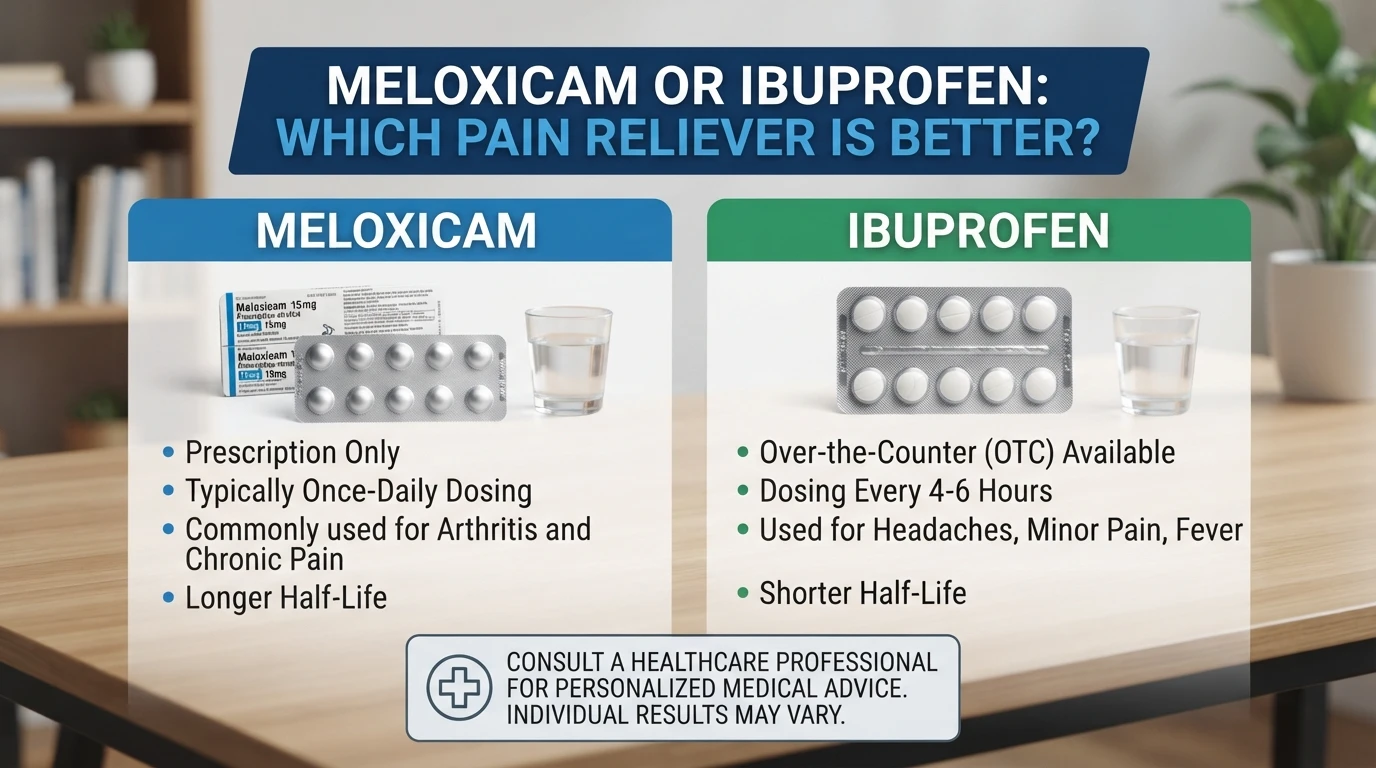
Meloxicam or ibuprofen is a common comparison for people seeking relief from pain, inflammation, and arthritis symptoms. Both medications belong to a class of drugs called nonsteroidal anti-inflammatory drugs (NSAIDs), but they differ in strength, duration of action, availability, and recommended uses. Meloxicam is a prescription medication commonly used for long-term management of conditions like osteoarthritis and rheumatoid arthritis, while ibuprofen is widely available over the counter for short-term relief of pain, fever, and inflammation. Choosing between the two depends on your medical condition, treatment goals, and overall health. In this guide, we’ll compare meloxicam and ibuprofen, explain how each medication works, discuss their benefits and potential side effects, and help you understand which option may be more appropriate for your needs.
If you’re comparing meloxicam or ibuprofen, you’re probably looking for the best medication to relieve pain, reduce inflammation, or treat conditions like arthritis, muscle injuries, or joint pain. Both medications belong to a group of drugs called nonsteroidal anti-inflammatory drugs (NSAIDs), but they differ in strength, how long they last, dosing schedules, and how they’re typically used.
People search for meloxicam or ibuprofen because they want to know which medication works better for their condition, which has fewer side effects, and whether one is safer for long-term use. Although both medications reduce pain and inflammation, they are not interchangeable, and one may be more appropriate depending on your medical condition and your healthcare provider’s recommendation.
This guide compares meloxicam and ibuprofen, explains their differences, discusses common uses, and outlines important safety considerations.
Meloxicam or Ibuprofen – Quick Answer
The quick answer is:
- Meloxicam is a prescription NSAID (though availability varies by country) commonly used for long-term conditions such as osteoarthritis and rheumatoid arthritis because it provides all-day relief with once-daily dosing.
- Ibuprofen is commonly available over the counter in many countries and is often used for short-term pain, fever, and inflammation.
Neither medication is universally better—the right choice depends on your condition, overall health, and medical advice.
Examples
- A person with chronic arthritis may be prescribed meloxicam.
- Someone with a headache or minor sprain may use ibuprofen for short-term relief.
Comparison Table
| Feature | Meloxicam | Ibuprofen |
| Drug Class | NSAID | NSAID |
| Common Use | Chronic inflammation | Short-term pain and fever |
| Duration | Long-acting | Shorter-acting |
| Typical Dosing | Once daily | Every 4–8 hours (as directed) |
| Prescription | Usually yes (varies by country) | Often available over the counter |
The Origin of Meloxicam or Ibuprofen
About Meloxicam
Meloxicam is an NSAID commonly prescribed to reduce pain, swelling, and stiffness associated with arthritis and other inflammatory conditions.
About Ibuprofen
Ibuprofen is one of the world’s most widely used NSAIDs and is commonly taken to relieve pain, reduce fever, and decrease inflammation.
Why People Compare Them
Both medications are used to treat:
- Arthritis pain
- Muscle pain
- Joint pain
- Back pain
- Inflammation
However, they differ in dosing frequency, duration of action, and typical clinical use.
Meloxicam vs Ibuprofen Features
Meloxicam Strengths
- Long-lasting relief
- Once-daily dosing
- Commonly prescribed for arthritis
- Helpful for chronic inflammation
- Convenient for ongoing treatment
Ibuprofen Strengths
- Widely available
- Effective for short-term pain
- Helps reduce fever
- Fast onset for many people
- Useful for occasional aches and pains
Comparison Table
| Category | Meloxicam | Ibuprofen |
| Chronic Arthritis | Excellent | May Help |
| Short-Term Pain | Good | Excellent |
| Fever Reduction | Not Commonly Used | Excellent |
| Once-Daily Use | Yes | No |
| Long-Term Prescription Use | Common | Less Common |
Which Medication Should You Choose?
The best choice depends on your symptoms and your healthcare provider’s advice.
Meloxicam May Be Appropriate If:
- You have chronic arthritis.
- You need all-day pain control.
- Your healthcare provider prescribes it.
Ibuprofen May Be Appropriate If:
- You have occasional pain.
- You have a headache or fever.
- You need short-term pain relief.
- Your healthcare provider recommends it.
Patient-Based Recommendation
| Situation | Possible Choice |
| Osteoarthritis | Meloxicam (if prescribed) |
| Rheumatoid Arthritis | Meloxicam (if prescribed) |
| Headache | Ibuprofen |
| Muscle Strain | Ibuprofen |
| Chronic Joint Pain | Consult Your Healthcare Provider |
Common Mistakes with Meloxicam or Ibuprofen
Mistake 1: Taking Both Without Medical Advice
Since both are NSAIDs, taking them together can increase the risk of side effects such as stomach bleeding, ulcers, and kidney problems. Always follow your healthcare provider’s instructions.
Mistake 2: Assuming Stronger Means Better
The best medication depends on your condition, not simply its duration or prescription status.
Mistake 3: Ignoring Recommended Dosages
Never take more than the prescribed or labeled dose.
Mistake 4: Using NSAIDs Long-Term Without Medical Supervision
Long-term NSAID use may increase the risk of stomach, kidney, and cardiovascular problems in some people.
Mistake 5: Not Mentioning Other Medications
Tell your healthcare provider about all medicines and supplements you take to avoid interactions.
Meloxicam or Ibuprofen in Everyday Examples
Arthritis Example
“My doctor prescribed meloxicam for my knee arthritis.”
Sports Injury Example
“I took ibuprofen after spraining my ankle.”
Back Pain Example
“We discussed meloxicam or ibuprofen during my medical appointment.”
Daily Pain Management Example
“My healthcare provider recommended a treatment plan based on my symptoms.”
Meloxicam or Ibuprofen – Google Trends & Usage Data
Interest in meloxicam or ibuprofen remains high among people seeking pain relief and arthritis treatment information.
Popular Search Queries
- Meloxicam vs ibuprofen
- Is meloxicam stronger than ibuprofen?
- Can you take meloxicam and ibuprofen together?
- Best NSAID for arthritis
- Meloxicam for joint pain
Common Search Intent
Users want to compare:
- Effectiveness
- Side effects
- Safety
- Duration
- Arthritis treatment
Popular Audiences
- Arthritis patients
- Adults with joint pain
- Athletes
- Older adults
- Caregivers
Meloxicam vs Ibuprofen Comparison Table
| Feature | Meloxicam | Ibuprofen |
| NSAID | Yes | Yes |
| Reduces Pain | Yes | Yes |
| Reduces Inflammation | Yes | Yes |
| Reduces Fever | Not a primary use | Yes |
| Long-Acting | Yes | No |
| Once-Daily Dosing | Yes | No |
| Best Choice | Depends on Medical Needs | Depends on Medical Needs |
FAQs
Which is better, meloxicam or ibuprofen?
Neither is better for everyone. Meloxicam is often used for chronic inflammatory conditions, while ibuprofen is commonly used for short-term pain and fever.
Is meloxicam stronger than ibuprofen?
Meloxicam lasts longer in the body, but “stronger” isn’t the best comparison. The right medication depends on the condition being treated.
Can I take meloxicam and ibuprofen together?
Do not combine them unless your healthcare provider specifically instructs you to do so, as using two NSAIDs together increases the risk of serious side effects.
Which lasts longer?
Meloxicam generally provides longer-lasting pain relief than ibuprofen.
Which medication is safer?
Both medications have potential risks and benefits. The safest choice depends on your health history, other medications, and your healthcare provider’s guidance.
Conclusion:
When comparing meloxicam and ibuprofen, both medications are effective NSAIDs that reduce pain and inflammation, but they are typically used in different situations. Meloxicam is often prescribed for chronic inflammatory conditions such as arthritis because it provides long-lasting relief with once-daily dosing. Ibuprofen is widely used for short-term pain, fever, and minor injuries due to its accessibility and shorter duration of action.
Neither medication is the right choice for everyone. Factors such as your medical condition, age, other medications, and overall health all play an important role in determining which treatment is most appropriate.
If you’re unsure whether meloxicam or ibuprofen is the better option for you, consult your healthcare provider. They can evaluate your symptoms, discuss the potential benefits and risks, and recommend the treatment that best matches your individual needs.

I am Oliver Bennett is the founder and writer behind Grammlii.com, where he shares insightful content on language, meanings, expressions, and effective communication. Passionate about making knowledge simple and accessible, he helps readers explore words, ideas, and their deeper significance.