Have you ever wondered whether to write ax or axe? You are not alone. Both spellings are correct, but the right choice can depend on where you live and who you are writing for.
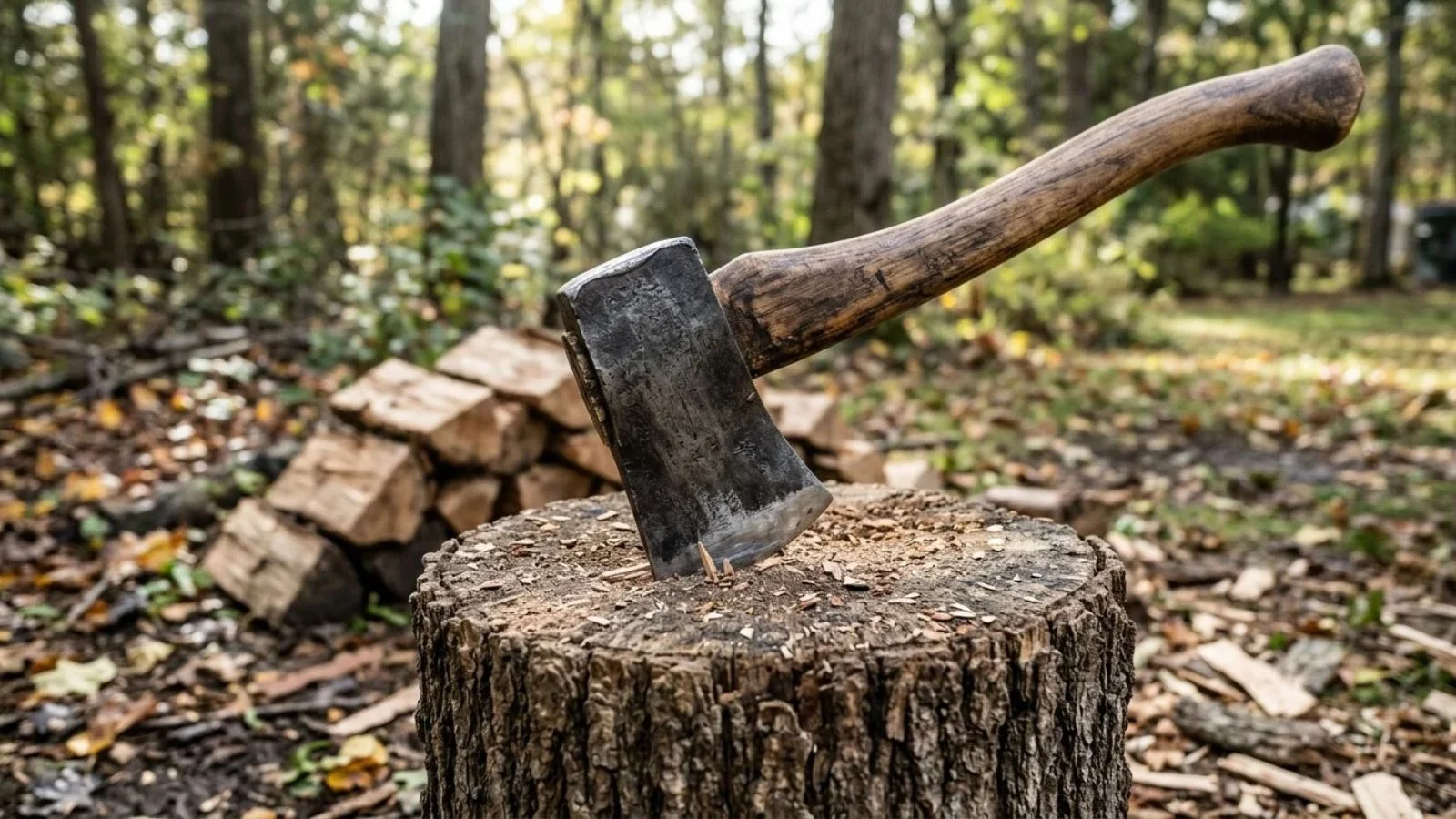
These two words have the same meaning and sound almost the same. They both name a tool with a sharp metal blade. People use it to cut wood, chop trees, and split logs.
The confusion often starts when writers see one spelling in an American book and another in a British article.
They may wonder if one spelling is wrong or if the words have different meanings. The good news is that both forms are accepted in English.
In this guide, you will learn the meaning of ax and axe, their history, and the difference between American and British spelling.
You will also see simple examples, common mistakes, and useful tips. By the end, you will know which spelling to use in school, work, and everyday writing.
Ax or Axe – Quick Answer
Both ax and axe are correct spellings of the same word.
- Ax: The shorter spelling, common in American English.
- Axe: The longer spelling, used in British English and also accepted in American English.
Both words describe a tool with a sharp blade. It is used to cut wood or chop trees.
Examples:
- He used an ax to cut the old tree.
- She picked up an axe to split the logs.
- The worker carried an ax into the forest.
- Dad bought a new axe for camping.
There is no difference in meaning between the two spellings.
The Origin of Ax or Axe

The word comes from the Old English word æx or wax. It was used to describe a tool for cutting wood.
The word has a long history. People have used axes for thousands of years. Early axes were made from stone. Later, people made them from bronze and iron. Today, many axes have strong metal heads and wooden or plastic handles.
Over time, the word developed into two common spellings:
- Ax
- Axe
The shorter form, ax, became popular in American English. The longer form, axe, remained common in British English.
Both spellings have the same history and meaning. The difference is mainly a matter of spelling style.
British English vs American English Spelling
British and American English often use different spellings for the same words. Ax and axe are another example.
In American English, both forms are correct, but ax is often preferred in dictionaries and everyday writing.
In British English, axe is the standard spelling.
Here is a simple comparison:
| Feature | American English | British English |
| Common spelling | Ax | Axe |
| Alternative spelling | Axe | Ax |
| Meaning | Cutting tool | Cutting tool |
| Pronunciation | Same | Same |
| Example | He bought an ax. | He bought an axe. |
More examples:
American English:
- The farmer used an ax.
- He placed the ax near the wood.
- She bought a small ax for camping.
British English:
- The farmer used an axe.
- He placed the axe near the wood.
- She bought a small axe for camping.
Remember that the spelling may change, but the meaning does not.
Which Spelling Should You Use?
Choosing between ax and axe is easy when you know your audience.
1. Use Ax for American English
If you are writing for people in the United States, ax is a good choice.
Examples:
- He used an ax to cut the branches.
- The ax was made of strong steel.
2. Use Axe for British English
If your readers are in the United Kingdom, axe is the better choice.
Examples:
- The man carried an axe.
- She used an axe to split the wood.
3. Use One Spelling for Global Content
If you write for readers around the world, choose one spelling and use it throughout your article.
Axe is widely recognised internationally. However, ax is also easy to understand.
4. Follow Your Style Guide
Some schools, websites, and publishers have their own spelling rules. Always follow their preferred style.
The most important rule is consistency. Do not switch between ax and axe without a good reason.
Common Mistakes with Ax or Axe
Many writers make small mistakes when using these words. Here are some common errors and how to fix them.
Mistake 1: Thinking Ax Is Wrong
Incorrect idea: Ax is not a real English word.
Correct: Ax is a correct spelling, especially in American English.
Mistake 2: Thinking Axe Has a Different Meaning
Incorrect idea: An ax and an axe are two different tools.
Correct: Both words have the same meaning.
Mistake 3: Mixing Both Spellings
Incorrect: He bought an ax. Later, he used the axe.
Correct: He bought an ax. Later, he used the ax.
Mistake 4: Forgetting the Plural Form
The plural forms are axes for both spellings.
Examples:
- The shop sells several axes.
- Two axes were kept in the shed.
Mistake 5: Confusing Ax with Axe as a Verb
The verb form is also used in English. It can mean to remove something or end a plan.
Examples:
- The company decided to axe the project.
In American English, ax can also be used as a verb.
Ax or Axe in Everyday Examples

Both spellings can appear in many types of writing. The best choice depends on your audience and writing style.
1. In Emails
American English:
“Hi John, I bought a new ax for the camping trip.”
British English:
“Hi John, I bought a new axe for the camping trip.”
2. In News Articles
American English:
“The worker used an ax to remove the fallen tree.”
British English:
“The worker used an axe to remove the fallen tree.”
3. On Social Media
- Just bought a new camping ax!
- This axe is perfect for cutting firewood.
- Getting ready for a weekend in the forest!
4. In Formal Writing
American English:
“The tool known as an ax is commonly used for cutting wood.”
British English:
“The tool known as an axe is commonly used for cutting wood.”
5. In Everyday Conversations
- Do you have an ax?
- Where did you put the axe?
- I need an ax to cut this wood.
- Please keep the axe in the shed.
These examples show that both spellings work in everyday communication.
Ax or Axe Google Trends & Usage Data
People search for both ax and axe because they want to know which spelling is correct.
The use of each spelling can vary by country and writing style.
American English
In the United States, ax is a common dictionary-preferred spelling. Axe is also widely understood and used.
British English
In the United Kingdom, axe is the standard spelling. It is also common in many other English-speaking countries.
Canada and Australia
Axe is generally the preferred spelling in Canada and Australia, although readers understand both forms.
Global English
Both spellings are recognised around the world. The choice often depends on the writer’s preferred English style.
Google Trends data can change over time. Search interest may also vary by location and context. Without a specific live Trends comparison, it is best not to claim exact search percentages or rankings.
Ax vs Axe Comparison Table
Here is a quick comparison to help you remember the difference.
| Word or Feature | Ax | Axe |
| Correct spelling | Yes | Yes |
| Meaning | Cutting tool | Cutting tool |
| American English | Common | Also accepted |
| British English | Less common | Standard |
| Pronunciation | Same | Same |
| Plural | Axes | Axes |
| Example | An old ax | An old axe |
| Verb use | Accepted | Accepted |
Quick tip: Use ax for American English and axe for British English.
FAQs About Ax or Axe
1. Is it an axe or axe?
Both spellings are correct. Ax is common in American English, while axe is the standard spelling in British English.
2. Is ax correct in American English?
Yes. Ax is a correct and common American English spelling. Axe is also accepted.
3. Is the axe British or American?
Axe is the standard British English spelling. It is also used in American English.
4. Do ax and axe mean the same thing?
Yes. Both words describe a tool with a sharp blade used for cutting wood.
5. What is the plural of ax or axe?
The plural form is axes for both spellings.
Example: The workers carried three axes.
6. How do you pronounce ax and axe?
Both words have the same pronunciation. They sound like “aks.”
7. Which spelling should I use in an SEO article?
Choose the spelling that matches your target audience. Use ax for American readers and axe for British readers. You can also mention both forms naturally in your article to help readers find the answer.
Conclusion:
The words ax and axe are both correct. They have the same meaning, pronunciation, and use. Both describe a sharp tool that people use to cut wood, chop trees, and split logs.
The main difference is regional spelling. Ax is common in American English, while axe is the standard spelling in British English. Both forms are understood in many English-speaking countries.
If you write for an American audience, choose ax. If your readers are in the United Kingdom, Australia, or other regions that follow British spelling, axe is usually the better choice.
You should also follow your school’s, website’s, or publisher’s style guide. Most importantly, stay consistent throughout your writing.

I am Oliver Bennett is the founder and writer behind Grammlii.com, where he shares insightful content on language, meanings, expressions, and effective communication. Passionate about making knowledge simple and accessible, he helps readers explore words, ideas, and their deeper significance.