Have you ever wondered whether to write girlie or girly? Both words look almost the same, sound alike, and are used to describe things linked to girls or women. But is one spelling better than the other?
The answer is simple: both girlie and girly are correct English spellings. However, they can have slightly different uses and tones.
The word girly is more common in everyday writing. It often describes something feminine, such as girly clothes, girly colors, or girly activities.
The word girlie can have the same meaning, but it may sound more playful, cute, or informal.
People often search for “girlie or girly” because they want to know which spelling to use in a text, email, social media post, or formal document. They may also wonder whether British and American English use different forms.
Girlie or Girly – Quick Answer
Both girlie and girly are correct spellings. They can describe something that is typical of girls or women, feminine, or associated with traditionally feminine styles and interests.
However, girly is generally the more common choice when you use the word as an adjective.
Examples:
- She loves wearing girly dresses.
- Her room has a cute and girly look.
- I bought a girlie birthday card for my friend.
- They planned a fun girlie night out.
The main difference is tone and usage:
- Girly: A common adjective used to describe feminine styles, looks, or interests.
- Girlie: An informal or playful form that can also be used as a noun in certain contexts.
Quick Comparison Table
| Word | Meaning | Common Use |
| Girly | Feminine or related to girls | Everyday descriptions |
| Girlie | Feminine, cute, or playful | Informal speech and writing |
| Girly style | A feminine style | Fashion and lifestyle |
| Girlie night | A fun night with female friends | Casual conversations |
Easy tip: Use girly for most everyday descriptions. Use girlie when you want a playful or informal tone.
The Origin of Girlie or Girly
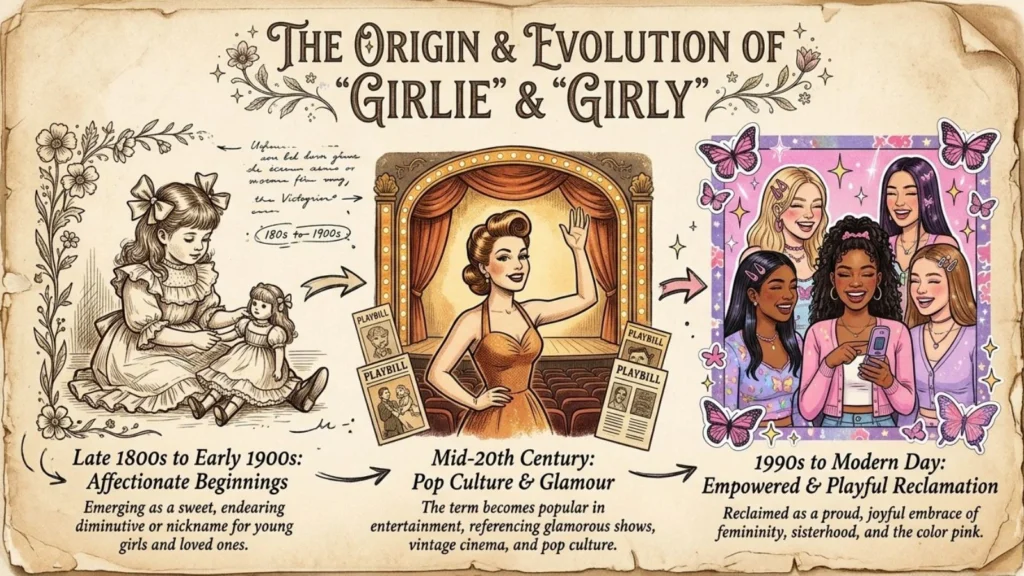
The words girlie and girly both come from the word girl.
The word girl has a much older history. It appeared in Middle English and was once used to refer to a young person of either sex. Over time, its meaning changed, and it became the word mainly used for a female child or young woman.
The endings -ie and -y are often used in English to form familiar, affectionate, or descriptive words.
Where Does Girly Come From?
The word girly is formed by adding the suffix -y to girl. It describes something that has qualities traditionally linked with girls or women.
For example:
- Girly clothes
- Girly colors
- Girly fashion
- Girly accessories
It is often used in casual conversations about style, beauty, and personal interests.
Where Does Girlie Come From?
The word girlie uses the ending -ie. This spelling can give the word a softer, more playful, or more affectionate feel.
For example:
- A girlie gift
- A girlie party
- A girlie magazine
The word can also be used as a noun. In some contexts, girlie refers to a girl or woman in an informal way. It can also appear in expressions such as girlie magazine, which may refer to magazines featuring images of women.
Why Are There Two Spellings?
English has many words with different endings that still sound the same or have similar meanings.
Examples include:
- Sweetie and sweetie-like forms
- Doggy and doggie
- Mommy and mummy (with different meanings in some regions)
The endings -y and -ie can both create familiar or informal forms. That is why both girly and girlie exist.
British English vs American English Spelling
British and American English both accept the spellings girly and girlie.
Unlike words such as colour and color, there is no strict British-versus-American spelling rule that requires one form over the other.
The choice usually depends on the sentence, tone, and personal style.
Girly in British English
In British English, girly is a common adjective. People use it to describe feminine clothes, activities, colors, and styles.
Examples:
- She likes girly clothes.
- The shop sells girly accessories.
- We planned a girly weekend.
The spelling girlie is also understood, especially in casual language.
Girly in American English
American English also uses girly as the standard everyday adjective.
Examples:
- She has a girly bedroom.
- I love your girly outfit.
- We are having a girlie night.
American speakers may use both spellings, but girly is a common choice for descriptive writing.
British vs American Comparison Table
| Feature | British English | American English |
| Common adjective | Girly | Girly |
| Informal alternative | Girlie | Girlie |
| Girly clothes | Correct | Correct |
| Girlie night | Correct | Correct |
| Formal writing | Prefer clear, neutral wording | Prefer clear, neutral wording |
Important: Neither spelling belongs only to British or American English. Both are accepted in both varieties.
Which Spelling Should You Use?
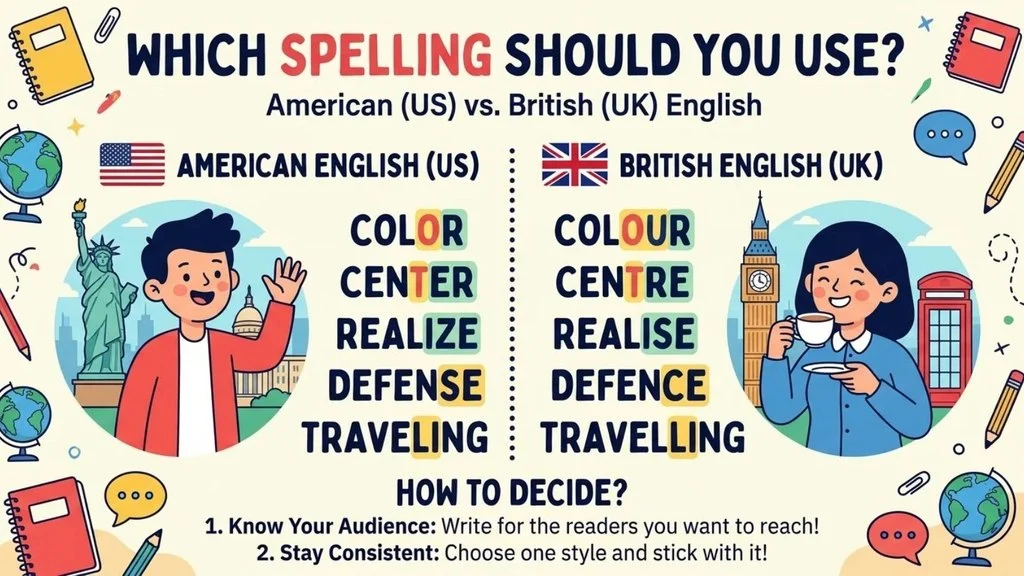
Choosing between girlie and girly depends on your audience and the tone of your writing.
Here is a simple guide.
1. For American English
Use girly when describing something feminine or associated with girls.
Examples:
- She likes girly fashion.
- This room looks very girly.
- I bought a girly pink dress.
You can use girlie in casual expressions when it suits your style.
2. For British English
The same advice applies to British English. Girly is a natural choice for everyday descriptions.
Examples:
- She enjoys girly activities.
- They planned a girly shopping trip.
- Her style is cute and girly.
3. For Global English
If you are writing for an international audience, girly is a safe and familiar choice.
It is easy to understand and works in most everyday situations.
4. For Formal and Professional Writing
In formal writing, you may want to avoid both words if they sound too casual.
Instead, use more specific words such as:
- Feminine
- Elegant
- Delicate
- Traditionally feminine
- Designed for women
For example:
Informal: The collection has a girly style.
Formal: The collection has a feminine design.
Which One Is Best?
For most everyday writing, choose girly. Use girlie when you want a cute, friendly, or playful tone.
Common Mistakes with Girlie or Girly
Although both spellings are correct, people sometimes use them in the wrong way.
Here are some common mistakes to avoid.
Mistake 1: Thinking Girlie Is Always Wrong
Some people believe that girlie is a spelling mistake.
That is not true. It is a recognized English word.
Incorrect: Girlie is never a real word.
Correct: Girlie is an accepted informal spelling.
Mistake 2: Thinking Girly Is Only American
The word girly is not limited to American English.
It is also used in British English and other English-speaking countries.
Correct: She likes girly clothes.
Mistake 3: Using Girly in Formal Writing
The word girly can sound too casual in professional writing.
Less formal: Our brand has a girly look.
More formal: Our brand has a feminine design.
Mistake 4: Confusing Girly With Girl
These words are related, but they do not have the same meaning.
- Girl: A female child or young woman.
- Girly: Feminine or associated with girls or women.
- Girlie: An informal or playful form with similar meanings.
Mistake 5: Using Both Spellings in the Same Article
Switching between girly and girlie without a reason can make your writing look inconsistent.
Tip: Choose one spelling as your main form and use it consistently throughout your article.
Girlie or Girly in Everyday Examples
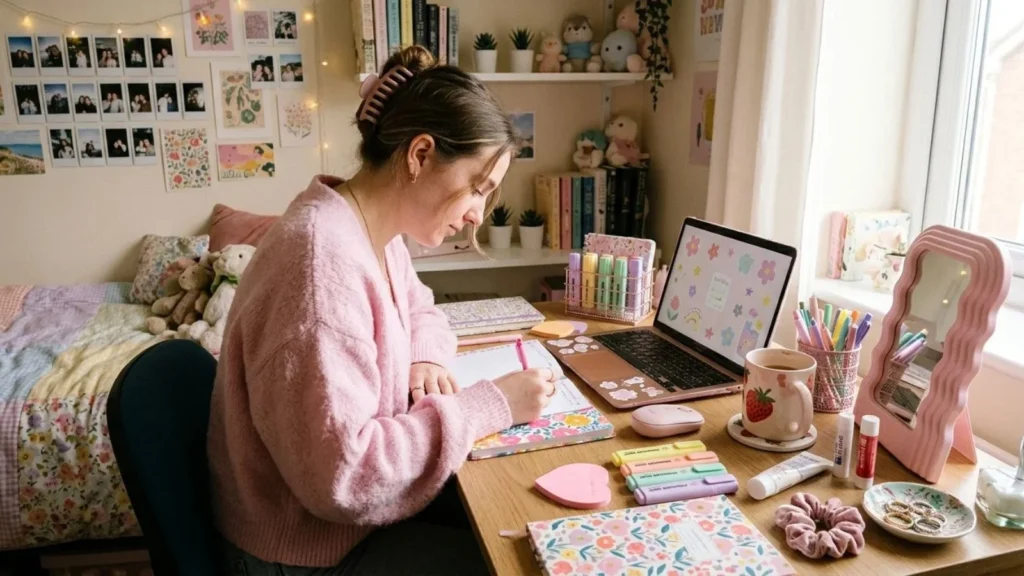
Both words appear in daily conversations, fashion content, social media, and informal writing.
Let’s look at how you can use them correctly.
1. In Everyday Conversations
People often use these words when talking about clothes, hobbies, and personal style.
Examples:
- Your new dress looks so girly.
- I love your girlie room decorations.
- We had a fun girly day together.
- She likes cute and girly things.
2. In Emails
In friendly emails, both spellings can work.
Example using girly:
Subject: Weekend Shopping
Hi Sarah,
I found a cute shop with some lovely girly clothes. I think you will love it. Let’s visit this weekend!
Best,
Emma
Example using girlie:
Subject: Girls’ Night
Hi Mia,
Let’s plan a girlie night this Friday. We can watch movies, enjoy snacks, and have fun together.
See you soon!
3. In News and Articles
News articles and lifestyle websites may use these words when discussing fashion, beauty, or popular culture.
Examples:
- The new collection features a girly style with soft colors.
- The brand launched a range of girlie accessories.
- Fashion trends are changing, and feminine styles are becoming popular.
For serious news reports, more precise words such as feminine or women’s fashion may be better.
4. On Social Media
Both words are common in casual posts, captions, and comments.
Examples:
- Feeling cute and girly today! 💗
- A little girlie shopping trip with my best friends.
- Pink outfits and girly vibes.
- Just enjoying a fun girlie day!
5. In Formal Writing
For business reports, academic work, and professional documents, use clearer alternatives.
Examples:
Informal: The design is very girly.
Formal: The design has a traditionally feminine appearance.
Informal: She prefers girly products.
Formal: She prefers products designed with feminine styling.
More Example Sentences
| Sentence | Correct Word |
| She loves girly dresses. | Girly |
| We planned a girlie night out. | Girlie |
| Her bedroom has a girly theme. | Girly |
| I bought her a girlie gift. | Girlie |
| This outfit looks very girly. | Girly |
| They enjoyed a girlie weekend. | Girlie |
Girlie or Girly Google Trends & Usage Data
People often want to know which spelling is more popular online: girlie or girly.
Both spellings appear in online searches, social media posts, fashion blogs, and lifestyle articles. However, their popularity can change depending on the country, topic, and search phrase.
Which Spelling Is More Popular?
Girly is generally the more familiar spelling for everyday adjective use.
For example, people may search for:
- Girly outfits
- Girly bedroom ideas
- Girly hairstyles
- Girly room decor
- Girly fashion
The spelling girlie also appears in searches, especially in phrases such as:
- Girlie night ideas
- Girlie gifts
- Girlie party themes
- Girlie activities
Popularity in Different Countries
Both words are understood in major English-speaking markets, including:
| Country | Common Usage |
| United States | Girly and girlie |
| United Kingdom | Girly and girlie |
| Canada | Girly and girlie |
| Australia | Girly and girlie |
| New Zealand | Girly and girlie |
These are general usage observations, not measured country rankings.
What About Google Trends?
Google Trends can help compare search interest for girlie and girly over time.
You can explore the comparison here:
When checking the results, select your target country and compare the same time period. You can also explore related search topics to see whether users are searching for fashion, beauty, parties, or other meanings.
SEO tip: If your article targets people asking which spelling is correct, use both keywords naturally. Make girly your main spelling and include girlie in headings, examples, and FAQs.
Girlie vs Girly Keyword Variations Comparison Table
Here is a simple comparison of common forms and phrases.
| Word or Phrase | Meaning | Usage |
| Girly | Feminine or girl-like | Common adjective |
| Girlie | Feminine or playful | Informal adjective |
| Girly girl | A girl who likes traditionally feminine styles | Casual |
| Girlie girl | A playful variation | Informal |
| Girly clothes | Feminine clothing styles | Fashion |
| Girlie clothes | Playful or feminine clothing | Informal |
| Girly room | A room with a feminine style | Lifestyle |
| Girlie night | A fun night with female friends | Casual |
| Girly gifts | Gifts with traditionally feminine themes | Shopping |
| Girlie magazine | A magazine featuring women or feminine themes | Context-dependent |
Remember: The best choice depends on the sentence. Both spellings are correct, but girly is generally the safer everyday adjective.
Frequently Asked Questions (FAQs)
1. Is Girlie or Girly Correct?
Both girlie and girly are correct English words. They can have similar meanings. However, girly is more common as an everyday adjective.
2. Is Girly a Real Word?
Yes. Girly is a real English word. It describes something feminine or traditionally associated with girls and women.
Example: She loves girly dresses.
3. Is Girlie a Real Word?
Yes. Girlie is also a recognized English word. It is often used in informal or playful language.
Example: We planned a girlie night out.
4. Is Girly British or American English?
Girly is used in both British and American English. It is not limited to one country.
5. What Is the Difference Between Girlie and Girly?
The main difference is their spelling and tone. Girly is the more common everyday adjective, while girlie can sound more playful or informal. Both can describe feminine things.
6. Should I Use Girly in Formal Writing?
You can use girly in casual writing, but it may sound informal in professional or academic work. Words such as feminine, elegant, or delicate may be better.
7. Which Spelling Is Better for SEO: Girlie or Girly?
For general content about feminine styles, girly is a useful primary keyword. However, if your topic is the spelling difference, include both girlie and girly naturally to match different search queries.
Conclusion:
The choice between girlie and girly is simple once you understand how both words work. Both are correct English spellings, and both can describe something feminine, cute, or traditionally linked with girls and women.
However, girly is usually the better choice for everyday writing. It is widely used in fashion, beauty, lifestyle content, and casual conversations.
You can write phrases such as girly clothes, girly fashion, and girly room without any problem.
On the other hand, girlie is useful when you want a playful, friendly, or informal tone. Phrases such as girlie night and girlie gifts are common examples.
There is no strict British or American spelling difference between these words. Both forms are understood in both varieties of English.

I am Ethan Whitmore is the founder and lead writer of Grammlii.com, passionate about exploring meanings, language, literature, and insightful ideas. Through well-researched and engaging content, he helps readers discover the deeper significance behind words, expressions, and everyday concepts.