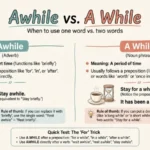
Have you ever stopped while writing an email because you were not sure whether to use aid or aide? You are not alone.
These two words sound the same, and both are correct English words. However, they have different meanings and uses. Choosing the wrong one can change the meaning of your sentence.
The good news is that learning the difference between aid and aid is simple. You only need to remember one main rule.
Aid usually means help, support, or assistance. Aide usually means a person who helps someone, often at work or in an official role.
For example, you can give financial aid to a family in need. You can also hire a teacher’s aide to help students in a classroom. Both sentences are correct, but the words cannot always replace each other.
In this guide, you will learn the meaning, origin, and correct use of aid and aide. You will also see examples, common mistakes, spelling differences, and answers to frequently asked questions.
By the end, you will know which word to use in emails, schoolwork, news articles, and formal writing.
Aid or Aide – Quick Answer
The words aid and aide sound the same but have different meanings.
- Aid is usually a noun or verb. It means help, support, or assistance.
- Aide is a noun. It means a person who helps someone with a task or job.
Here are some simple examples:
| Word | Meaning | Example |
| Aid | Help or support | The family received financial aid. |
| Aid | To help someone | These tools aid learning. |
| Aide | A person who helps | The teacher thanked her aide. |
| Aide | An assistant in an official role | The president spoke with an aide. |
Easy trick to remember: If you mean help, use aid. If you mean a person who helps, use aid.
For example:
- Correct: The school provides aid to students.
- Correct: The school hired an aide to help students.
- Incorrect: The school hired an aid to help students. (If you mean a person, use aid.)
Remember that aid can also be used as a verb. For example, “The new program will aid local businesses.” The word aide does not work as a verb.
The Origin of Aid and Aide

The words aid and aide have a shared history. Both are linked to the idea of helping someone or giving support. Their meanings became more distinct as English developed.
Where Does the Word Aid Come From?
The word aid comes from Old French aide, which meant help or assistance. It is also linked to the Latin word adjutare, meaning to help or assist.
Over time, English speakers began using aid as both a noun and a verb.
As a noun, it refers to help or support.
Example: The country sent food aid after the storm.
As a verb, it means to help make something easier or better.
Example: Good sleep can aid memory.
Today, the word aid appears in many areas, including education, health, business, law, and international relations.
Where Does the Word Aide Come From?
The word aide entered English from French. It developed as a word for a helper or assistant.
Today, aide often refers to someone who helps another person perform a job or complete a task.
Examples include:
- A teacher’s aide who helps students.
- A medical aide who supports patient care.
- A political aide who helps an elected official.
- A personal aide who assists someone with daily tasks.
The final letter e helps distinguish the spelling of the person-related word from the more general word aid.
Why Do Aid and Aide Sound the Same?
English has many words that sound alike but have different spellings and meanings. These words are called homophones.
Aid and aide are homophones because they share the same pronunciation in standard English. However, their meanings and grammatical roles differ.
Other examples of homophones include:
- Right and write
- Flour and flower
- Pair and pear
- Sea and see
The key lesson is simple: when two words sound the same, use their meaning and role in the sentence to choose the correct spelling.
British English vs American English Spelling
There is no major spelling difference between British English and American English for aid and aide. Both varieties use the same spellings and meanings.
Unlike words such as colour and color, these words do not change based on the country where you write.
Aid and Aide in British English
British English uses aid for help or assistance and aid for a person who helps.
Examples:
- The charity provides aid to families.
- The teacher asked her aide to prepare the classroom.
- The government announced a new aid program.
- A senior aide spoke to the minister.
Aid and Aide in American English
American English follows the same rules.
Examples:
- The student received financial aid.
- The senator spoke with an aide.
- The new plan may aid economic growth.
- The school hired a classroom aide.
Spelling Comparison Table
| Word or phrase | British English | American English |
| Financial assistance | Aid | Aid |
| Person who assists | Aide | Aide |
| Emergency support | Emergency aid | Emergency aid |
| Teacher’s assistant | Teacher’s aide | Teacher’s aide |
| Political assistant | Political aide | Political aide |
| Verb meaning to help | Aid | Aid |
| Aid-related adjective | Aid-related | Aid-related |
As the table shows, the spellings remain the same in both forms of English.
Professional tip: Focus on the meaning of the word rather than the country of your audience. Whether you are writing for readers in the United States, the United Kingdom, Canada, Australia, or elsewhere, the same basic rule applies.
Which Spelling Should You Use?

The right spelling depends on what you want to say. Your country, audience, and writing style do not usually change the choice between aid and aide.
When to Use Aid
Use aid when you mean help, support, or assistance. You can also use it as a verb when describing an action that helps someone or something.
Examples:
- The government offered aid to farmers.
- The medicine may aid recovery.
- The charity collects money for disaster aid.
- Extra lessons can aid student progress.
In these examples, aid describes help or the act of helping.
When to Use Aide
Use aid when you mean a person who assists another person.
Examples:
- The teacher’s aide helped the children.
- A political aide answered the reporter’s questions.
- The nurse’s aide helped the patient.
- The manager asked his aide to arrange the meeting.
In each sentence, aide refers to a person.
Advice for American Writers
If you write for an American audience, use aid for assistance and aid for a person. This is especially important in education, healthcare, government, and business writing.
Example: The senator’s aide helped arrange a meeting about foreign aid.
Advice for British and Commonwealth Writers
British, Canadian, Australian, and other Commonwealth writers can follow the same rule.
Example: The school received financial aid and hired a classroom aide.
Advice for Global and Professional Writing
For international readers, choose the word that matches the meaning. Keep your sentences clear and direct.
If you are unsure, ask yourself one question: Am I talking about help, or am I talking about a person?
- If you mean help, use aid.
- If you mean a person who helps, use aid.
This quick check works in almost every everyday situation.
Common Mistakes with Aid and Aide
Even experienced writers sometimes confuse aid and aide because they sound the same. The best way to avoid mistakes is to understand how each word works in a sentence.
Mistake 1: Using Aid When You Mean a Person
Incorrect: The president spoke with his aid.
Correct: The president spoke with his aide.
Why? The sentence refers to a person who assists the president. Therefore, aide is the correct word.
Mistake 2: Using Aide When You Mean Help
Incorrect: The charity offered financial aid to the family.
Correct: The charity offered financial aid to the family.
Why? The sentence refers to money or assistance, not a person. Use aid.
Mistake 3: Treating Aide as a Verb
Incorrect: The new program will aid local students.
Correct: The new program will aid local students.
Why? Aid can function as a verb. Aide is a noun and refers to a person.
Mistake 4: Confusing Aid Workers with Aides
These expressions can refer to different things.
- Aid workers are people who provide help, often during emergencies or humanitarian crises.
- Aides are assistants who help a particular person or perform a specific support role.
Examples: Aid workers delivered food to the village, while the mayor’s aide arranged the visit.
Both phrases are correct, but they describe different roles.
Mistake 5: Assuming British and American English Use Different Spellings
Incorrect assumption: British writers use aid, while American writers use aid.
Correct rule: Both varieties use aid for help and aid for a person.
The difference is based on meaning, not regional spelling rules.
Mistake 6: Ignoring the Meaning of the Sentence
Incorrect: The school hired extra aid for the classroom.
If you mean people who help in the classroom, write:
Correct: The school hired extra aides for the classroom.
However, aid would be correct if the sentence referred to additional support or resources.
The best way to avoid confusion is to read the whole sentence and decide what the word describes.
Aid or Aide in Everyday Examples

Understanding these words becomes easier when you see them in everyday situations. Both words are common in emails, news reports, schools, workplaces, and formal documents.
1. Aid or Aide in Emails
In professional emails, aid often refers to assistance, funding, or support. Aide refers to a person who helps someone.
Examples:
Using aid:
- We would like to request financial aid for our project.
- Thank you for your aid during the planning process.
- The new software will aid our team in completing tasks faster.
Using aide:
- Please contact the manager’s aide to arrange a meeting.
- The teacher’s aide will help prepare the classroom.
- I have copied the director’s aide on this email.
2. Aid or Aide in News Articles
News articles often use aid when reporting on emergencies, financial support, or international assistance. The word aide is common when discussing political officials and their assistants.
Examples:
- The government announced emergency aid for flood victims.
- International aid reached families affected by the disaster.
- A senior presidential aide discussed the new policy.
- The minister’s aide answered questions from reporters.
3. Aid or Aide in Social Media
On social media, both words can appear in posts, comments, and captions.
Examples:
- “Every small act of aid can make a difference.”
- “The school is collecting donations to provide aid to families.”
- “A teacher’s aide can make a big difference in a child’s school day.”
- “The politician’s aide shared an update about the meeting.”
4. Aid or Aide in Academic Writing
Academic writing uses aid to describe support, resources, and things that help a process.
Examples:
- Visual tools can aid student learning.
- Financial aid can help students attend college.
- The study examines how exercise may aid memory.
The word aide may appear when discussing people who provide assistance in educational or research settings.
Example: The research aide helped collect data for the study.
5. Aid or Aide in Formal Writing
In formal writing, choosing the correct word helps make your message clear and professional.
| Situation | Correct example |
| Government support | The government provided financial aid. |
| Workplace assistant | The director’s aide arranged the meeting. |
| Medical support | The treatment may aid recovery. |
| Classroom support | The classroom aide helped the students. |
| Emergency assistance | The country sent emergency aid. |
| Political assistant | The senator’s aide released a statement. |
Aid or Aide Google Trends and Usage Data
The words aid and aide appear in different contexts online. Their search interest can vary by country, topic, and current events.
However, there is no single permanent ranking that tells us which word is more popular in every country. Google Trends data changes over time, and exact comparisons require a selected date range, location, and search category.
How Aid Is Used Around the World
The word aid is widely used in discussions about money, public services, education, health, and emergency support.
Common search and writing contexts include:
- Financial aid for college students.
- Foreign aid between countries.
- Humanitarian aid after natural disasters.
- First aid for injuries.
- Government aid programs.
These topics can attract increased interest during major events, funding announcements, or emergencies.
How Aide Is Used Around the World
The word aide is often used when discussing assistants and support staff.
Common contexts include:
- Teacher’s aides in schools.
- Nursing aides in healthcare.
- Political aides in government.
- Personal aides who provide daily support.
- Administrative aides in offices.
Interest in these uses may vary with job searches, education topics, and political news.
How to Compare Aid and Aide on Google Trends
You can compare the words using Google Trends at Google Trends.
For a useful comparison:
- Enter aid and aide as separate search terms.
- Select a country, such as the United States or the United Kingdom.
- Choose a time range, such as the past 12 months or five years.
- Compare interest over time and by region.
- Review related queries to understand why people search for each word.
Remember that Google Trends uses a normalized scale from 0 to 100. It shows relative search interest, not the exact number of searches.
Aid vs Aide: Comparison Table
Use this table as a quick reference when you need to choose between the two words.
| Feature | Aid | Aide |
| Main meaning | Help or assistance | A person who helps |
| Part of speech | Noun and verb | Noun |
| Refers to a person? | Sometimes, in certain expressions such as an aid worker | Yes, when referring to an assistant |
| Refers to support? | Yes | No, not in the usual modern sense |
| Used in British English? | Yes | Yes |
| Used in American English? | Yes | Yes |
| Example | The family received aid. | The teacher’s aide helped the class. |
| Common phrase | Financial aid | Political aide |
| Verb form | The program may aid recovery. | Not used as a verb |
Common Aid and Aide Expressions
| Expression | Correct meaning | Example |
| Financial aid | Money or financial support | She applied for financial aid. |
| First aid | Immediate basic medical help | He learned first aid at school. |
| Foreign aid | Support given to another country | The nation sent foreign aid. |
| Aid worker | A person who provides assistance | The aid worker delivered food. |
| Teacher’s aide | A person who helps a teacher | The teacher’s aide helped the class. |
| Political aide | An assistant to a politician | The political aide answered questions. |
| Research aide | A person who assists with research | The research aide organized the data. |
Frequently Asked Questions About Aid or Aide
1. What is the main difference between aid and aide?
Aid means help, support, or assistance. It can also be used as a verb meaning to help. Aide means a person who assists someone, such as a teacher’s aide or political aide.
Example: The school provided financial aid and hired a classroom aide.
2. Is aid or aide correct in a sentence?
Both words are correct, but they have different uses.
Use aid when you mean help or assistance. Use aid when you mean a person who helps.
Examples:
- Correct: The charity provided aid.
- Correct: The charity hired an aide.
The correct choice depends on the meaning of your sentence.
3. Is an aide always a person?
In standard modern English, aide is a noun that usually refers to a person who assists someone in a particular role.
Examples include a teacher’s aide, a political aide, and a nursing aide.
If you mean help, support, or the act of helping, use aid instead.
4. Can aid be used as a verb?
Yes. Aid can be both a noun and a verb.
As a noun: The family received aid.
As a verb: The new system will aid workers in their daily tasks.
Aide is not used as a verb in standard English.
5. Do British and American English spell aid and aid differently?
No. British English and American English use the same spelling for both words.
In both varieties, aid means help or assistance, while aide means a person who helps.
6. Is it financial aid or financial aid?
The correct phrase is financial aid.
It refers to money or support given to help someone pay for education, living costs, or other needs.
Example: The university offers financial aid to eligible students.
Financial aid is incorrect when you mean financial assistance.
7. Is it teacher’s aid or teacher’s aide?
If you mean a person who helps a teacher, the correct phrase is teacher’s aide.
Example: The teacher’s aide helped the children with their reading.
If you mean support or resources provided to a teacher, aid may be correct in a different sentence. However, teacher’s aide is the standard term for the assistant.
8. How can I remember the difference between aid and aid?
Use this simple memory trick:
- Aid = assistance.
- Aide = assistant.
Both words sound the same, so focus on their meanings instead of their pronunciation. If the sentence describes help, choose aid. If it describes a person who helps, choose an aide.
Conclusion:
Choosing between aid and aide is simple once you understand what each word means. Although both words sound the same, they serve different purposes in English.
Aid refers to help, support, or assistance. It can also be used as a verb to describe an action that helps someone or something. Aide, on the other hand, refers to a person who assists someone in a specific role.
For example, a student may receive financial aid to pay for college, while a teacher’s aide may help that student learn in the classroom. Both words are correct in their proper contexts.
There is no major difference between British and American English when it comes to these spellings. Writers in both countries follow the same basic rules.
The best way to avoid mistakes is to look at the meaning of the sentence before choosing a word.

I am Oliver Bennett is the founder and writer behind Grammlii.com, where he shares insightful content on language, meanings, expressions, and effective communication. Passionate about making knowledge simple and accessible, he helps readers explore words, ideas, and their deeper significance.