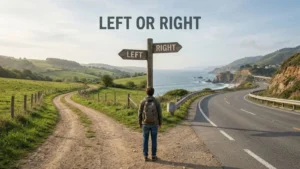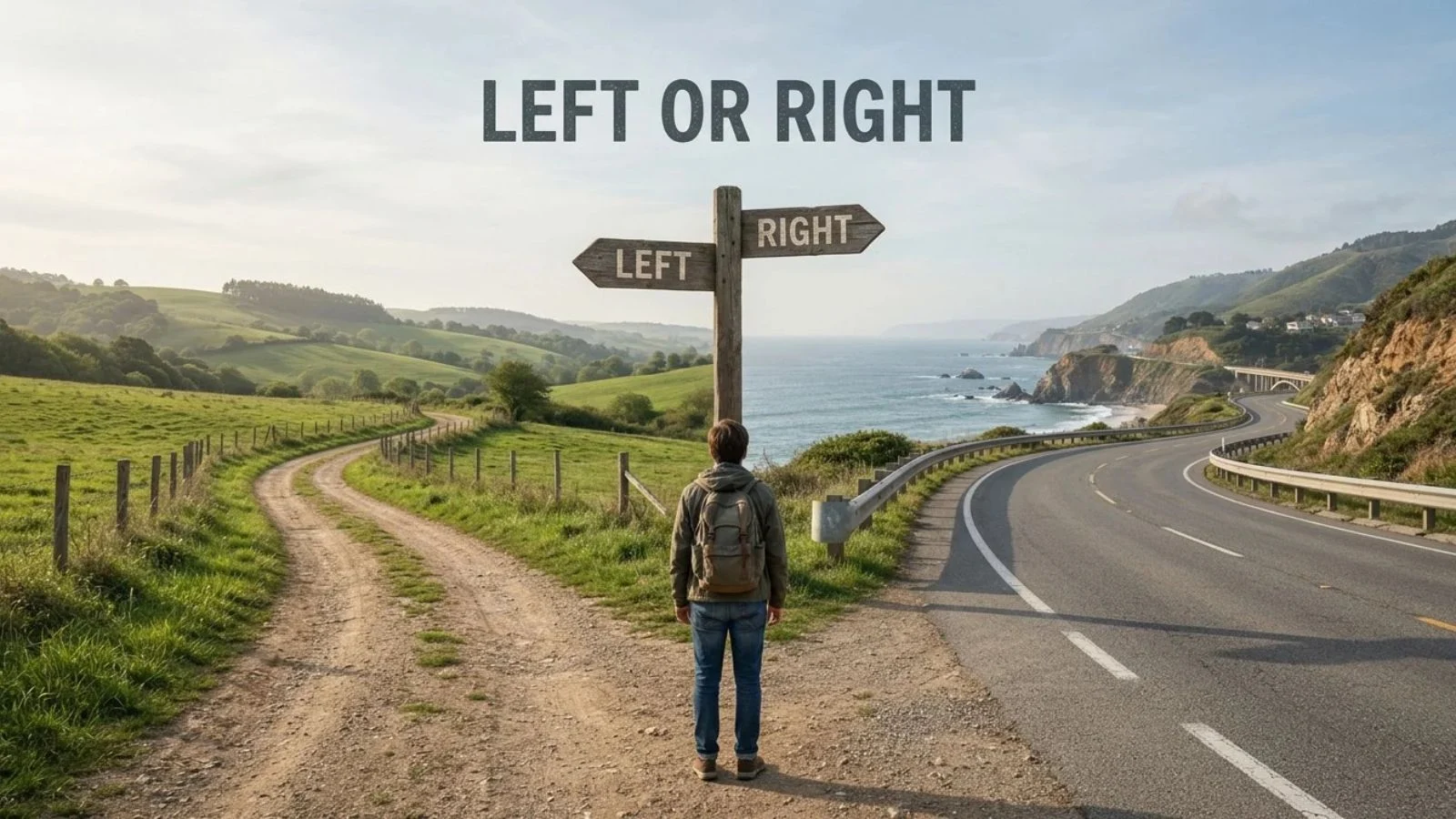
Have you ever stopped to think about whether something is on the left or right? These two simple words help us describe direction, position, and movement every day.
We use them when giving directions, driving, reading maps, following instructions, and talking about where things are.
People often search for “Left or Right” because they want to understand the difference between these words and know when to use each one.
Although both words describe opposite directions, they can sometimes cause confusion, especially when someone is following written instructions or explaining a location.
The good news is that learning the difference is easy. Left refers to the side opposite right, while right refers to the side opposite left. Both words can also have other meanings depending on the sentence.
In this guide, you will learn what left and right mean, where these words come from, how to use them correctly, and which common mistakes to avoid. We will also look at everyday examples to help you use both words with confidence.
Left or Right – Quick Answer
Left and right are words used to describe two opposite directions or sides.
- Left: The side opposite right.
- Right: The side opposite left.
For example:
- Turn left at the next street.
- Turn right after the traffic light.
- The book is on your left.
- The school is on your right.
Both words are correct. The right choice depends on the direction or side you want to describe.
The word “right” can also mean correct or proper. For example, “You are right” means someone has given a correct answer.
The word “left” can also be the past tense of “leave.” For example, “She left the office early.”
The Origin of Left or Right
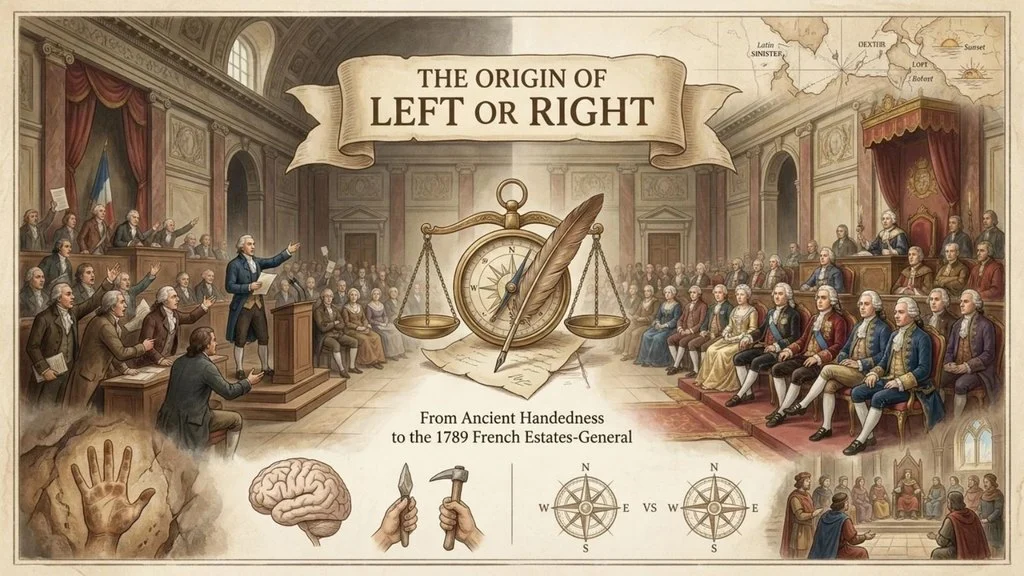
The words left and right have old roots in the English language.
The word left comes from Old English lyft, which was used to describe the left side. Its earlier history is less certain, but it has long been linked to the idea of weakness or something less strong.
The word right comes from Old English riht. It originally meant straight, correct, or proper. Over time, it also became the common word for the side opposite left.
These words developed over many centuries and became part of everyday English.
Today, left and right are used around the world. They appear in road signs, maps, directions, sports, and daily conversations.
Although their meanings are opposite when describing direction, both words can have other meanings depending on the context.
British English vs American English Spelling
There is no spelling difference between left and right in British and American English.
Both countries use the same spellings:
- British English: Left and Right
- American English: Left and Right
The words are also pronounced in almost the same way in both varieties of English.
| Word | British English | American English | Meaning |
| Left | Left | Left | Opposite side of right |
| Right | Right | Right | Opposite side of left |
| Left-hand | Left-hand | Left-hand | Located on the left side |
| Right-hand | Right-hand | Right-hand | Located on the right side |
Examples in British English
- Turn left at the roundabout.
- The shop is on your right.
- Keep to the left side of the road.
Examples in American English
- Turn right at the next street.
- The gas station is on your left.
- Stay on the right side of the road.
As you can see, there is no spelling change between the two countries. Only some road rules and driving habits may differ.
Which Spelling Should You Use?
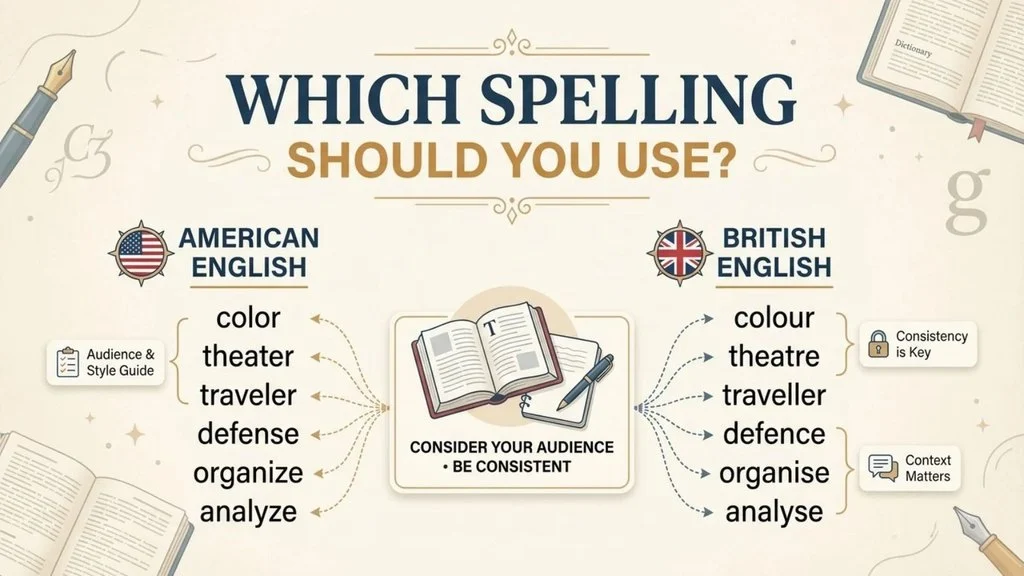
You should use both words based on the direction or meaning you want to express. Neither word is better than the other.
Here is some simple advice:
For American English: Use left and right in directions, road signs, emails, and everyday writing. American drivers generally drive on the right side of the road.
For British English: Use the same spellings. British drivers generally drive on the left side of the road.
For Commonwealth countries: Countries such as Australia, New Zealand, and India also use left and right. Driving sides can vary by country.
For global English: Both words are understood around the world. Use clear directions so readers know exactly which side you mean.
The main thing to remember is that left and right are not spelling variations. They are two different words with opposite directional meanings.
Common Mistakes with Left or Right
Many people understand left and right but still make mistakes when using them in sentences.
Here are some common errors and their corrections.
1. Confusing left with right
Incorrect: Turn left when you need to go right.
Correct: Turn right at the next street.
Always check the direction before giving instructions.
2. Using the wrong side in directions
Incorrect: The bank is on your left. (When it is actually on the right.)
Correct: The bank is on your right.
Make sure your directions match the actual location.
3. Confusing right with correct
Example: You are right about the answer.
Here, right means correct, not a direction.
4. Confusing left with leave
Incorrect: He left the room yesterday, so he left early.
Correct: He left the room yesterday.
Left is the past tense of leave.
5. Forgetting the hyphen in some compound words
Examples:
- Left-hand side
- Right-hand side
- Left-wing politics
- Right-wing politics
Hyphen use can depend on sentence structure and style.
Left or Right in Everyday Examples
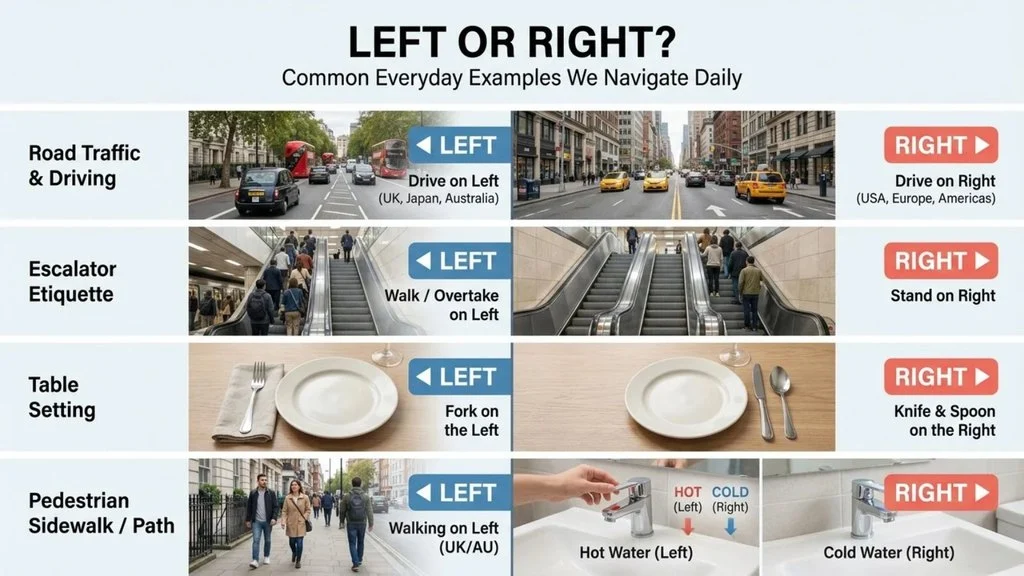
Left and right are useful in many types of writing and communication.
1. In Emails
You can use these words when explaining where something is located.
Examples:
“Please find the meeting room on the right side of the main entrance.”
Another example:
“Turn left after entering the building. My office is the second door.”
2. In News
News reports often use left and right to explain directions, positions, or political views.
Examples:
- The car turned left before reaching the bridge.
- The building is located on the right side of the road.
- The political debate focused on left-wing and right-wing views.
3. On Social Media
People use these words in captions, comments, and posts.
Examples:
- Which side looks better, left or right?
- Take the road on the left!
- My right-hand side looks better in this picture.
4. In Formal Writing
Both words are suitable for professional and academic writing.
Examples:
- The entrance is located on the left side of the building.
- Turn right after passing the main gate.
- The diagram shows the left and right sides of the human body.
Always use the word that matches the direction or meaning you want to explain.
Left or Right Google Trends & Usage Data
Left and right are common English words used in many countries. Both have a wide range of meanings, so people search for them in different situations.
Search interest may include:
- Education: Students search for the meanings of left and right.
- Driving: People look for directions and road rules.
- Technology: Users search for left and right buttons, arrows, and controls.
- Politics: People search for left-wing and right-wing political ideas.
- Everyday English: Language learners want to understand how these words work in sentences.
Popularity by Country
Both words are widely used in countries such as:
- United States
- United Kingdom
- Canada
- Australia
- India
- New Zealand
Search interest can change based on location, language, and topic.
For example, someone in the United States may search for right-side driving rules, while someone in the United Kingdom may search for left-side driving rules.
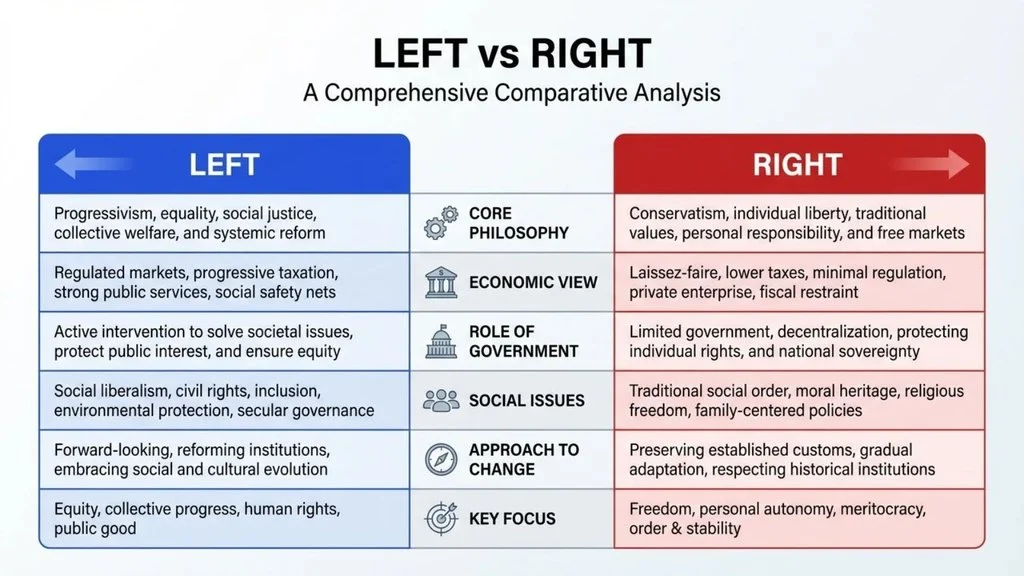
Left vs Right: Comparison Table
| Feature | Left | Right |
| Main meaning | Opposite side of right | Opposite side of left |
| Direction | Left direction | Right direction |
| Opposite word | Right | Left |
| Example | Turn left here. | Turn right here. |
| Other meaning | Past tense of leave | Correct or proper |
| Spelling | Left | Right |
| British English | Left | Right |
| American English | Left | Right |
The table shows that both words are correct but have different meanings. Choose the word that matches the direction or idea you want to express.
FAQs About Left or Right
1. Is left or right the correct word?
Both words are correct. Left and right describe opposite directions. Your choice depends on the side or direction you want to explain.
2. What is the main difference between left and right?
Left describes one side, while right describes the opposite side. They are commonly used to give directions and describe positions.
3. Is left or right different in British and American English?
No. Both British and American English use the same spelling for these words. There is no spelling difference.
4. Does right mean correct?
Yes. Right can mean correct, proper, or accurate. For example, “Your answer is right” means your answer is correct.
5. What does left mean in a sentence?
Left can describe a direction or be the past tense of leave. For example, “Turn left” describes a direction, while “He left home” means he went away.
6. Which side of the road do Americans drive on?
Americans generally drive on the right side of the road. In the United Kingdom, drivers generally use the left side.
7. How can I remember left and right?
You can remember them by making an L shape with your left hand using your thumb and index finger. The letter L can help you identify your left side.
Conclusion
Understanding left or right is simple once you know what each word means. Both are correct English words, but they describe opposite directions.
Left refers to one side, while right refers to the other. The correct choice depends on the direction, position, or meaning you want to express.
There is no spelling difference between British and American English. Both countries use left and right in the same way.
However, driving rules can differ because Americans drive on the right side of the road, while British drivers generally drive on the left.

I am Oliver Bennett is the founder and writer behind Grammlii.com, where he shares insightful content on language, meanings, expressions, and effective communication. Passionate about making knowledge simple and accessible, he helps readers explore words, ideas, and their deeper significance.