Have you ever wondered whether to write Aunty or Auntie? You are not alone. Both spellings are common, and many people use them when talking about their mother’s or father’s sister. But is one spelling correct, or can you use both?
The good news is that both Aunty and Auntie are correct English spellings. They have the same meaning and are used as friendly names for an aunt. The main difference is spelling preference and regional usage.
People often search for this phrase because they want to know which spelling is best for schoolwork, emails, social media posts, or formal writing.
Some people prefer Auntie, while others use Aunty because it feels more natural in their country or family.
Aunty or Auntie – Quick Answer
Both Aunty and Auntie are correct. They mean the same thing: a friendly or affectionate way to refer to your aunt.
- Auntie: A widely used spelling in British and American English.
- Aunty: A common alternative spelling, especially in British-influenced English varieties and parts of South Asia.
Examples:
- My Auntie Sarah is coming to visit.
- I love spending time with my Aunty.
- Happy birthday, Auntie!
- My aunty makes the best cakes.
There is no difference in meaning. You can use either spelling, but it is best to stay consistent throughout your writing.
The Origin of Aunty or Auntie
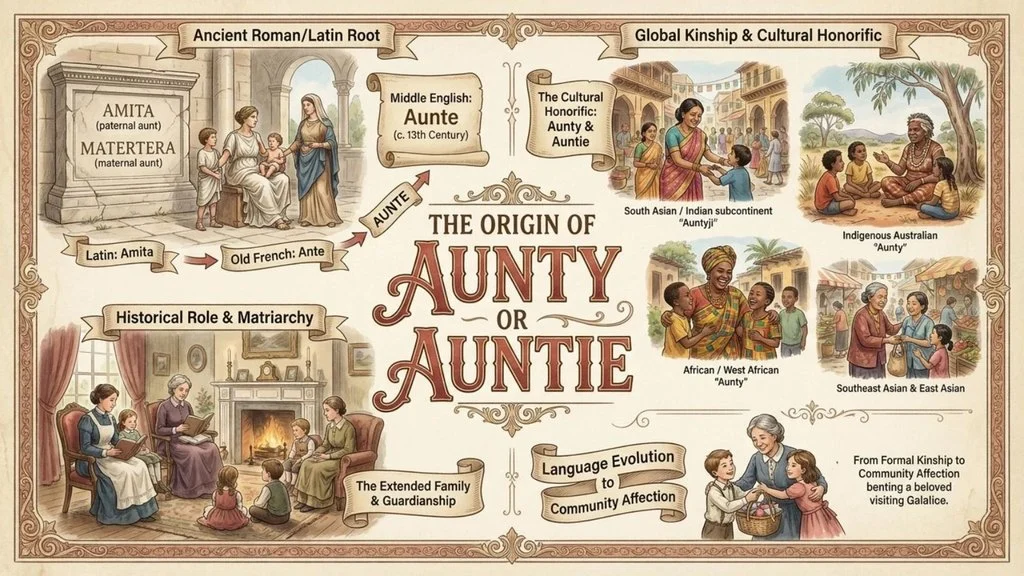
The word Auntie comes from the word aunt. The word aunt entered English around the 13th century through Anglo-French and Old French. It can be traced back to the Latin word amita, meaning a father’s sister.
Over time, people began using shorter and friendlier forms of family words. This led to words such as Auntie and Aunty.
Both spellings appeared in English during the late 18th century. The ending -ie and -y became common ways to make words sound more familiar or affectionate.
For example:
- Aunt → Auntie
- Aunt → Aunty
- Sweet → Sweetie
- Dad → Daddy
- Mum → Mummy
Today, both spellings are accepted. Neither spelling changes the meaning of the word. The choice often depends on personal preference, family tradition, or regional English.
Etymology, Origin & Meaning+2
British English vs American English Spelling
British and American English both accept Auntie and Aunty. However, Auntie is often treated as the main spelling in dictionaries, while Aunty is also a familiar and accepted alternative.
The spelling you see may depend on the writer’s country, family habits, or style.
British English
In British English, both spellings are used:
- My auntie lives in London.
- I am visiting my aunty this weekend.
- Auntie Jane sent me a birthday card.
The spelling Auntie is common in everyday writing. Aunty is also understood and accepted.
American English
In American English, Auntie is generally the more familiar spelling.
Examples:
- My Auntie Lisa is very kind.
- I called my auntie yesterday.
- We are having dinner with Auntie Mary.
Aunty is still a valid alternative, but many American writers prefer Auntie.
Spelling Comparison Table
| Feature | British English | American English |
| Common spelling | Auntie | Auntie |
| Alternative | Aunty | Aunty |
| Meaning | Aunt | Aunt |
| Formal use | Aunt | Aunt |
| Informal use | Auntie/Aunty | Auntie/Aunty |
| Plural | Aunties | Aunties |
The important point is that neither country has a strict rule that makes one spelling incorrect. Both forms are recognized in English dictionaries.
Collins English Dictionary+2
Which Spelling Should You Use?
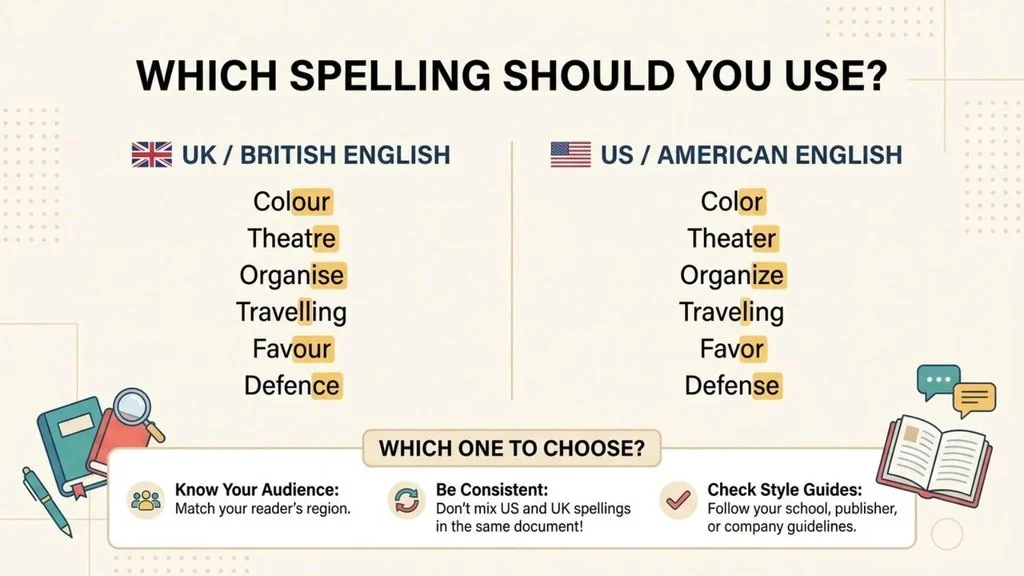
Choosing between Aunty and Auntie is easy once you know your audience. Both words are correct, but one may fit your writing style better.
1. For American Readers
Use Auntie if you are writing for an American audience. It is a familiar spelling and works well in everyday messages, stories, and family posts.
Example: My Auntie Rose is coming to visit us.
2. For British Readers
You can use either spelling in British English. Auntie is a good general choice, while Aunty is also acceptable.
Example: I always enjoy visiting my Auntie Helen.
3. For Indian and South Asian Readers
Both spellings are understood. The word Auntie is also widely used as a polite way to address or refer to an older woman who is not necessarily a family member.
Examples:
- My aunty lives next door.
- Good morning, Auntie!
- I met Mrs. Sharma’s auntie yesterday.
In some South Asian communities, people also use Auntie Ji as a respectful form of address.
oxfordlearnersdictionaries.co.uk+1
4. For Australian and Other Commonwealth Readers
Both spellings are acceptable. You may see Aunty in familiar Australian and Commonwealth usage.
Example: My Aunty lives in Sydney.
5. For International Writing
If you are writing for readers around the world, choose Auntie. It is widely recognized and easy to understand.
My recommendation: Use Auntie as your general spelling. Use Aunty when it matches your family’s preference or your regional style.
Common Mistakes with Aunty or Auntie
People sometimes make spelling and grammar mistakes when using these words. Here are some common errors and their corrections.
1. Thinking Aunty Is Incorrect
Incorrect idea: Aunty is always a spelling mistake.
Correct: Both Aunty and Auntie are accepted spellings.
2. Using Aunties as a Singular Word
Incorrect: My aunties is coming today.
Correct: My auntie is coming today.
Use auntie for one person and aunties for more than one.
3. Forgetting the Plural Ending
Incorrect: All my auntie are here.
Correct: All my aunties are here.
Add -s to make the plural.
4. Mixing Both Spellings
Incorrect: My auntie is kind, and my aunty is funny. I love both my Aunties.
This is not grammatically wrong, but switching spellings without a reason can look inconsistent.
Better: My aunties are kind and funny. I love spending time with them.
5. Confusing Aunt with Aunty
Aunt is the standard family term. Auntie and Aunty are informal or affectionate forms.
Examples:
- My aunt is a doctor.
- My auntie is a doctor.
- My aunty is a doctor.
All three sentences are correct.
6. Using the Wrong Capitalization
Use a capital letter when the word is part of a name or direct title.
Examples:
- I visited my auntie yesterday.
- I visited Auntie Sarah yesterday.
- Happy birthday, Auntie!
Use lowercase when you are talking about an aunt in general.
Aunty or Auntie in Everyday Examples
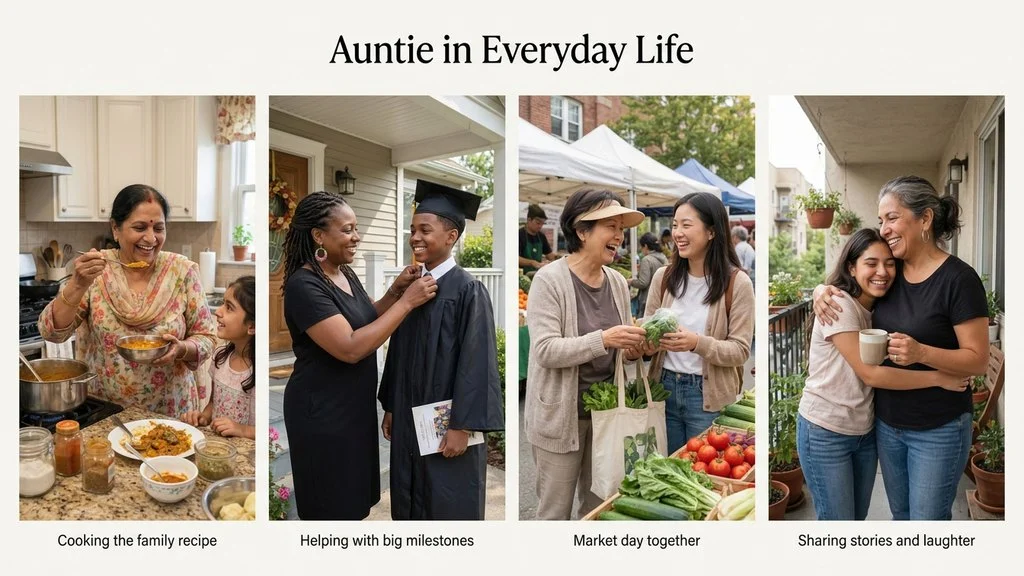
Both spellings work in everyday communication. The following examples show how to use them in different situations.
1. In Emails
When writing to a family member, you can use either spelling.
Examples:
Dear Auntie,
I hope you are doing well. I am writing to tell you that I will visit you next weekend. I cannot wait to see you.
Best wishes,
Emma
2. In News and Articles
Writers may use auntie or aunty when discussing family relationships or community life.
Examples:
- The young girl spent her summer holidays with her auntie.
- Aunty helped organize a family celebration.
- The children visited their auntie during the school holidays.
For professional news writing, aunt may be a more neutral choice.
3. On Social Media
Both spellings are popular choices for friendly posts and captions.
Examples:
- Happy birthday to my lovely Auntie! ❤️
- Weekend fun with my Aunty! 😊
- My auntie is my biggest supporter.
- Love you, Aunty! Thanks for everything.
4. In Formal Writing
For formal letters, reports, academic work, and professional documents, aunt is usually the better choice.
Examples:
- My aunt attended the family meeting.
- My aunt lives in New York.
- The children stayed with their aunt during the holiday.
Use Auntie or Aunty when the situation calls for a warm or personal tone.
5. In Family Conversations
Both forms sound natural in friendly conversations.
Examples:
- Can I visit my auntie tomorrow?
- My aunty makes delicious food.
- I called Auntie to wish her a happy birthday.
- My auntie always gives me good advice.
Aunty or Auntie Google Trends & Usage Data
Many people search for Aunty or Auntie because they want to know which spelling is more popular. Google Trends can help compare interest in both spellings across countries and over time.
However, it is important to understand that search interest and correct spelling are two different things.
1. Search Interest in the United States
American English commonly uses Auntie. Historical American English usage research also found that Auntie appeared more often than Aunty.
This makes Auntie a useful choice for American-focused articles, websites, and general writing.
universidadbautista.org+1
2. Search Interest in the United Kingdom
Both spellings are used in British English. Older British usage research also found that the difference between the two spellings was smaller than in American English.
universidadbautista.org+1
3. Search Interest in India and South Asia
In Indian English and other South Asian varieties, Auntie is also used as a polite form of address for older women.
This wider meaning helps explain why people may search for the word in different social and family contexts.
oxfordlearnersdictionaries.co.uk
4. Search Interest in Australia
Both forms are understood in Australian English. Aunty also has a recognizable place in Australian informal usage.
5. How to Compare Google Trends Data
You can compare both terms directly using the Google Trends Explore tool:
- Search for “Aunty.”
- Add “Auntie” as a second search term.
- Select Worldwide as the location.
- Choose a time range, such as the past 12 months.
- Check the country-by-country results.
Google Trends uses a relative scale from 0 to 100. These numbers do not show the exact number of searches. They show relative interest based on the selected location and time range. Low-volume searches may also appear as zero.
Trends Help+1
Data note: This article does not claim a live country ranking or exact search-volume figures. Check Google Trends for the latest comparison.
What does this mean for SEO?
If you are writing an article about this keyword, include both spellings naturally. Explain that they have the same meaning, provide examples of each, and use one main spelling consistently in your headings and body text.
Frequently Asked Questions (FAQs)
1. Is Aunty or Auntie correct?
Both are correct. They are alternative spellings of the same word and have the same meaning. You can use either one.
2. Is Auntie more common than Aunty?
Auntie is generally more common in American English. Both spellings are used in British English and other English-speaking countries.
3. Is Aunty British or American?
Aunty is used in both British and American English. It is also common in some Commonwealth countries and South Asian communities.
4. What is the plural of Auntie?
The plural of Auntie is Aunties.
Example: My aunties are visiting us this weekend.
5. Can I write Auntie in a formal letter?
Yes, especially when writing personally to a family member. However, aunt is usually better for formal documents and professional writing.
6. Does Auntie mean the same as Aunty?
Yes. Both words refer to an aunt or are used as affectionate ways to address an older woman. The spelling does not change the meaning.
7. Should I use Aunty or Auntie in a birthday message?
You can use either spelling. Choose the version your aunt prefers or the spelling commonly used in your family.
Example: Happy birthday, Auntie! I hope your day is full of love and happiness.
Conclusion
Choosing between Aunty or Auntie is simple once you understand that both spellings are correct.
They have the same meaning and are used as friendly or affectionate forms of the word aunt. The main difference is regional preference and personal style.
Auntie is a widely recognized spelling, especially in American English. Aunty is also accepted and appears in British English, Australian English, and other Commonwealth varieties. Both forms are easy to understand.
If you are writing for an American audience or an international website, Auntie is a good general choice. If your family or local community prefers Aunty, you can use that spelling without worry.

I am Ethan Whitmore is the founder and lead writer of Grammlii.com, passionate about exploring meanings, language, literature, and insightful ideas. Through well-researched and engaging content, he helps readers discover the deeper significance behind words, expressions, and everyday concepts.