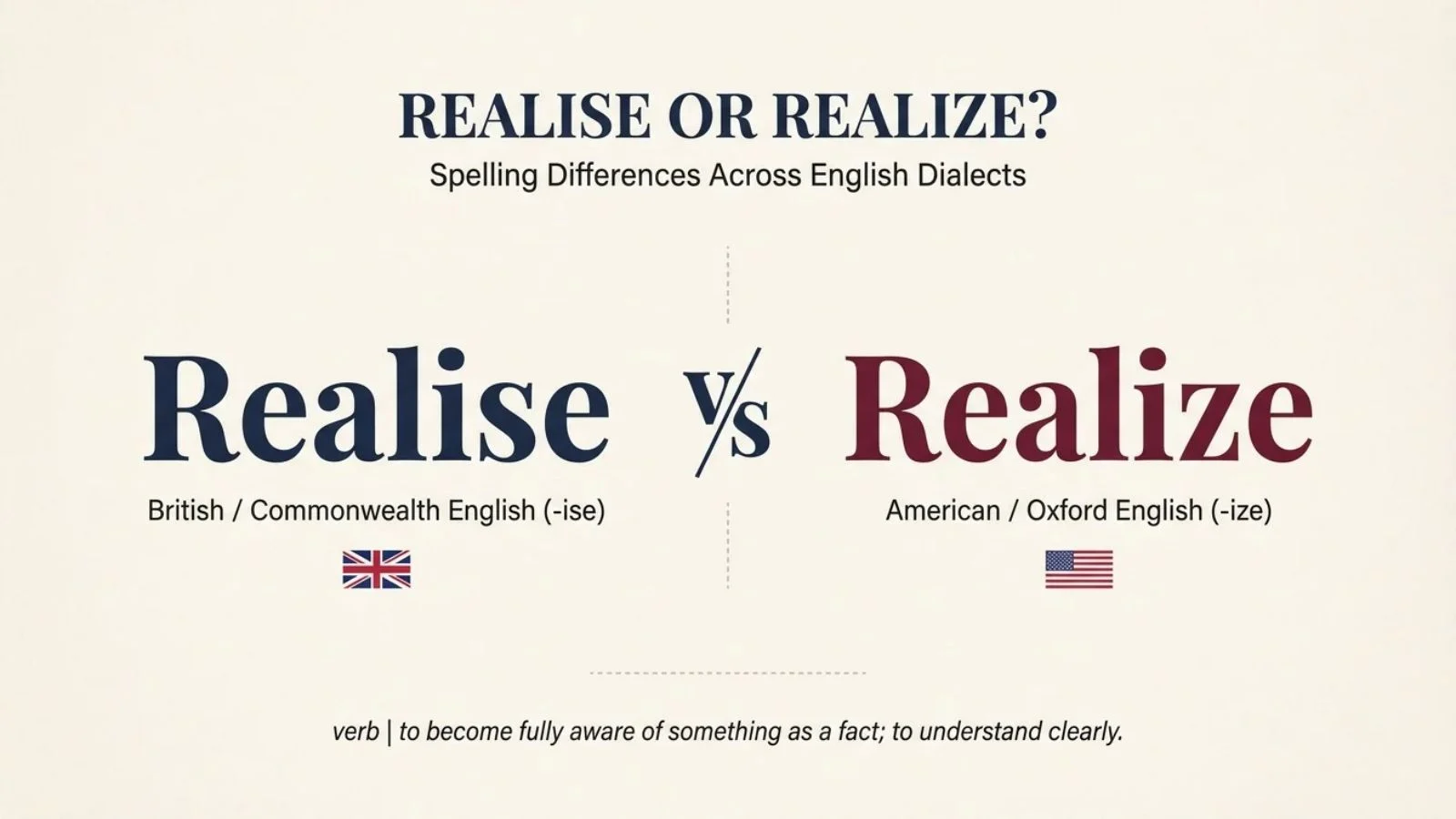
Have you ever written “realise” in a sentence and wondered if it should be “realize” instead? You are not alone.
Many people search for Realise or Realize because both spellings look correct, sound the same, and have the same meaning. So, which one should you use?
The answer depends on the type of English you are writing. Both words mean to understand something, become aware of a fact, or make something happen. However, British English often uses “realise,” while American English mainly uses “realize.”
This small spelling difference can cause confusion in schoolwork, emails, business documents, and online writing. Choosing the right version helps your writing look clear and professional.
In this guide, you will learn the meaning, origin, and spelling rules behind both words. You will also see simple examples, common mistakes, and advice on which spelling to use for different audiences. By the end, you will know exactly when to write “realise” and when to write “realize.”
Realise or Realize – Quick Answer
Both realise and realize are correct spellings of the same word.
The main difference is regional spelling:
- Realise: Common in British English, Australian English, and New Zealand English.
- Realize: Common in American English and also accepted in British English.
Both words mean to understand something, become aware of something, or achieve something.
Examples:
- British English: I did not realise how late it was.
- American English: I did not realize how late it was.
- Both: She wants to realise her dreams.
- Both: He finally realized his mistake.
Quick rule: Use “realise” when following traditional British spelling. Use “realize” when following American spelling. In British English, the -ize ending is also accepted.
The Origin of Realise or Realize
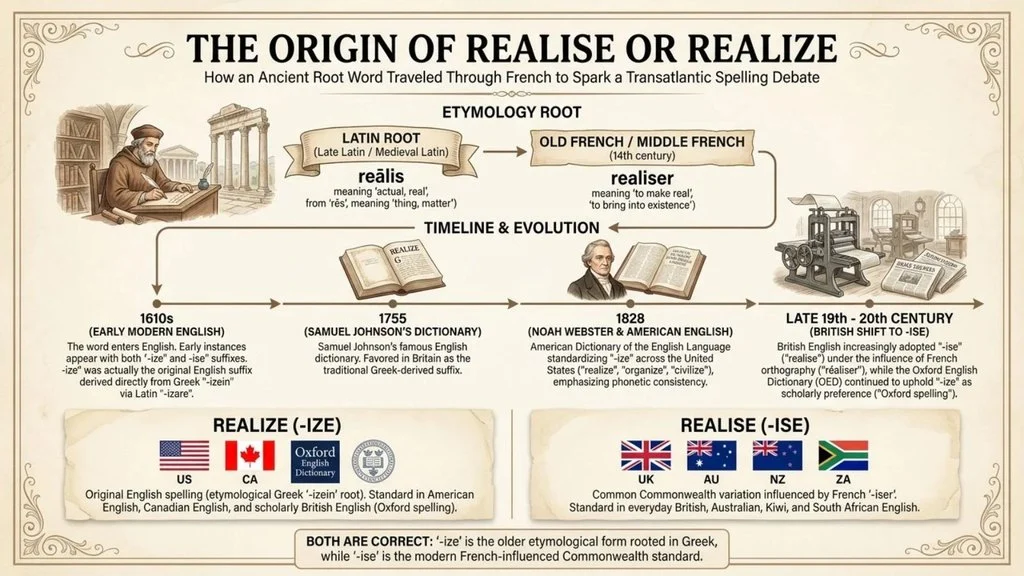
The word “realise” comes from the word “real,” which means something that exists or is true.
It has roots in the medieval Latin word realis, meaning actual or relating to things. The word later developed through French and entered English.
Over time, people began using “realise” to describe understanding something or making an idea become real.
The two spellings developed because English spelling changed in different regions.
Why Are There Two Spellings?
The difference mainly comes from British and American spelling traditions.
- British English often kept the “-ise” spelling in everyday writing.
- American English became more consistent with the “-ize” spelling.
- Both forms have remained in use because they follow accepted spelling traditions.
The word has not changed its meaning. Only the spelling is different.
British English vs American English Spelling
The biggest difference between “realise” and “realize” is the spelling of the final letters.
British English commonly uses “realise,” while American English normally uses “realize.”
However, there is one important detail: British English also accepts “realize.” The Oxford spelling system uses the “-ize” ending.
Spelling Rules
1. British English
In traditional British English, words ending in “-ise” are common.
Examples:
- Realise
- Organise
- Recognise
- Apologise
- Modernise
2. American English
American English usually uses “-ize” for these words.
Examples:
- Realize
- Organize
- Recognize
- Apologize
- Modernize
British vs American Spelling Comparison Table
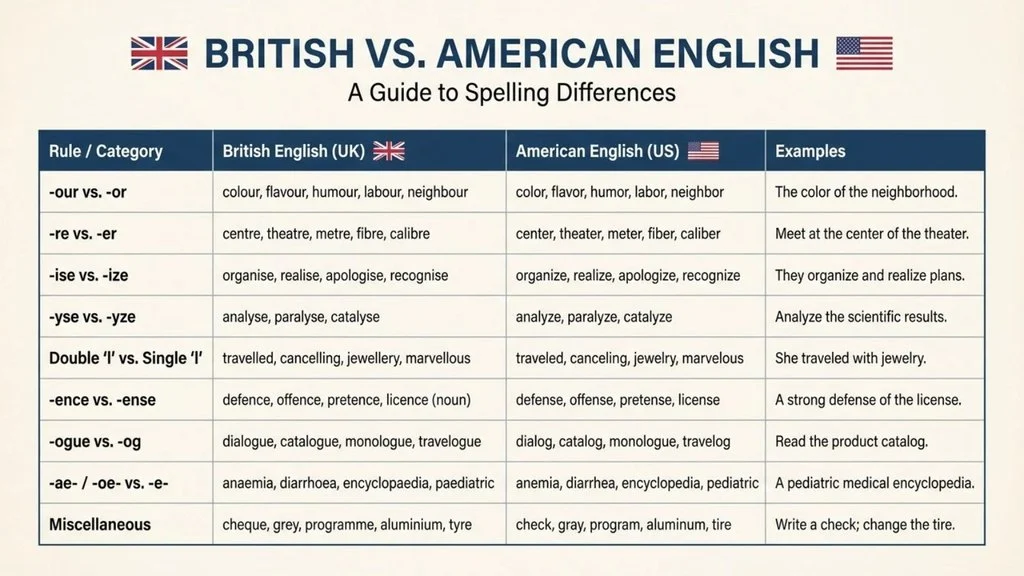
| British English | American English |
| Realise | Realize |
| Organise | Organize |
| Recognise | Recognize |
| Apologise | Apologize |
| Modernise | Modernize |
| Specialise | Specialize |
| Finalise | Finalize |
| Socialise | Socialize |
Important: The “-ize” spelling is not incorrect in British English. Both endings are accepted, but you should follow one spelling style throughout your writing.
Which Spelling Should You Use?
Choosing between “realise” and “realize” depends on your readers and where you publish your content.
Here is a simple guide.
1. For American Readers
Use “realize” when writing for people in the United States.
Examples:
- I realize that I made a mistake.
- You will realize the truth soon.
American dictionaries and style guides generally prefer this spelling.
2. For British Readers
Use “realise” if you follow traditional British English.
Examples:
- I realise that you are right.
- She did not realise the problem.
This spelling is common in the UK.
3. For Australian and New Zealand Readers
“Realise” is widely used in Australia and New Zealand.
Examples:
- I realise how important this is.
- They realise their mistakes.
4. For Global Websites and Blogs
If your website targets readers worldwide, choose one spelling style and use it consistently.
For example:
- Choose “realize” for an American audience.
- Choose “realise” for a British or Commonwealth audience.
Consistency is more important than choosing one spelling for everyone.
Common Mistakes with Realise or Realize
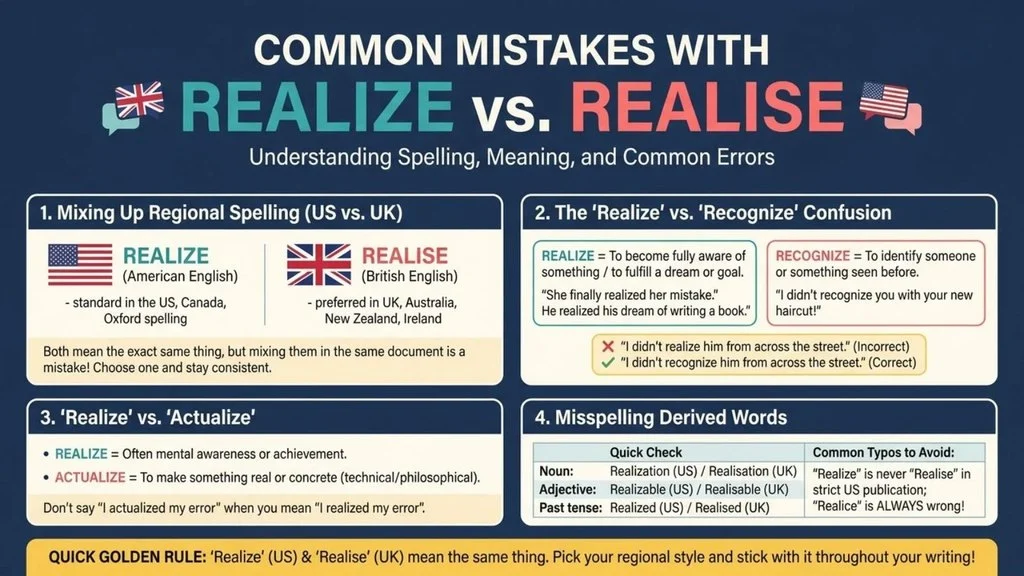
Many writers make small spelling mistakes when using these words. Here are some common errors and their corrections.
1. Mixing Both Spellings
Incorrect style:
- I realise the truth.
- I also realize my mistake.
Correct approach:
Choose one spelling style and use it throughout the same document.
2. Thinking One Spelling Is Wrong
Some people believe that “realise” is incorrect because American English uses “realize.”
This is not true. Both spellings are correct.
3. Using the Wrong Form for Your Audience
If you write for a British audience, using “realize” may look inconsistent with the rest of your British spelling.
Better: Follow the spelling style your readers expect.
4. Confusing Realise With Understand
The words are close in meaning, but they are not always interchangeable.
Examples:
- I understand the lesson.
- I realise why the lesson is important.
“Understand” means knowing something. “Realise” often means becoming aware of something.
5. Forgetting the Meaning
Both spellings can describe becoming aware of something or making an idea real.
Correct examples:
- I finally realised the truth.
- She wants to realize her goals.
Realise or Realize in Everyday Examples
Both spellings work in many types of writing. The choice depends on your preferred English style.
1. In Emails
British English:
“Hello John,
I have just realised that I sent the wrong file. Please find the correct document attached.
Best regards.”
American English:
“Hello John,
I have just realized that I sent the wrong file. Please find the correct document attached.
Best regards.”
2. In News Writing
British English:
“The company has realised that customer needs are changing.”
American English:
“The company has realized that customer needs are changing.”
3. On Social Media
British English:
- I just realised how quickly time passes!
- You realise your mistakes as you grow.
American English:
- I just realized how quickly time passes!
- You realize your mistakes as you grow.
4. In Formal Writing
British English:
“The organisation has realised the importance of environmental protection.”
American English:
“The organization has realized the importance of environmental protection.”
5. In Everyday Conversation
- I did not realise you were here.
- I did not realize you were here.
- She will realise the truth one day.
- She will realize the truth one day.
All four sentences are correct.
Realise or Realize Google Trends & Usage Data
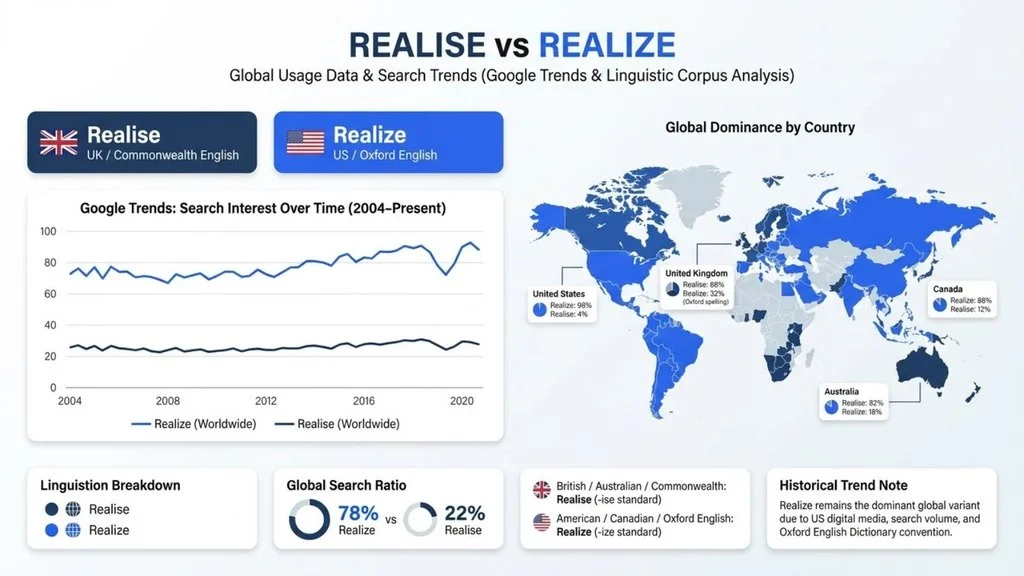
People search for both “realise” and “realize” because they want to know which spelling is correct.
The popularity of each spelling depends largely on the country and its preferred English style.
Where Is Realise More Common?
The spelling “realise” is widely used in:
- United Kingdom
- Australia
- New Zealand
- Ireland
- Other regions that follow British English conventions
Where Is Realize More Common?
The spelling “realize” is widely used in:
- United States
- American English publications
- Websites targeting American readers
What Do Search Trends Tell Us?
The two spellings have different regional audiences. American searches are more likely to use “realize,” while British and Commonwealth searches often use “realise.”
Google Trends can help compare interest in both spellings by country and over time. However, search interest does not show the total number of people who use each spelling.
For an accurate comparison, select a country, set the same time period, and compare both terms using Google Trends.
SEO Tip: If your website targets US readers, use “realize” in your main content. If you target UK readers, “realise” may be the better choice. You can mention the alternative spelling naturally to help readers find your article.
Realise vs Realize Word Variations Comparison Table
Here is a simple table showing both spellings and their related word forms.
| British Spelling | American Spelling | Meaning |
| Realise | Realize | Become aware |
| Realised | Realized | Became aware |
| Realising | Realizing | Becoming aware |
| Realisation | Realization | The act of understanding |
| Realisable | Realizable | Capable of being achieved |
| Unrealised | Unrealized | Not achieved or understood |
| Unrealise | Unrealize | Reverse or undo a realisation |
These forms follow the same general spelling pattern. Some related forms may be less common in everyday writing.
FAQs About Realise or Realize
1. Is it realise or realize?
Both are correct. “Realise” is common in traditional British English, while “realize” is standard in American English.
2. Is realize American or British?
“Realize” is the standard American spelling. It is also accepted in British English, especially in Oxford spelling.
3. Is realise British English?
Yes. “Realise” is widely used in traditional British English and in countries such as Australia and New Zealand.
4. Do realise and realize have the same meaning?
Yes. Both words mean to understand something, become aware of something, or make something happen.
5. Which spelling should I use in academic writing?
Follow the spelling guide provided by your school, university, or publisher. Use “realise” for traditional British English and “realize” for American English.
6. Is realised or realized correct?
Both are correct. “Realised” is common in British English, while “realized” is standard in American English.
7. Can I use realise and realize in the same article?
You should avoid mixing them without a clear reason. Choose one spelling style and use it consistently throughout your article.
Conclusion
Choosing between “realise” and “realize” is simple once you understand the difference between British and American English.
Both spellings are correct, and both have the same meaning. The only difference is the spelling style used in different regions.
Use “realise” when writing in traditional British English, Australian English, or New Zealand English.
Choose “realize” when writing for an American audience. Remember that British English also accepts the “-ize” spelling, so it is not wrong to use it.
If you write blog posts, emails, school assignments, or business documents, always think about your target audience. More importantly, keep your spelling consistent from beginning to end.

I am Oliver Bennett is the founder and writer behind Grammlii.com, where he shares insightful content on language, meanings, expressions, and effective communication. Passionate about making knowledge simple and accessible, he helps readers explore words, ideas, and their deeper significance.