Have you ever wondered whether you should use shampoo or conditioner first when washing your hair? You are not alone.
Many people ask this question because the order of hair products can affect how clean, soft, and healthy their hair feels. Using the right order can help remove dirt, control oil, and keep your hair smooth.
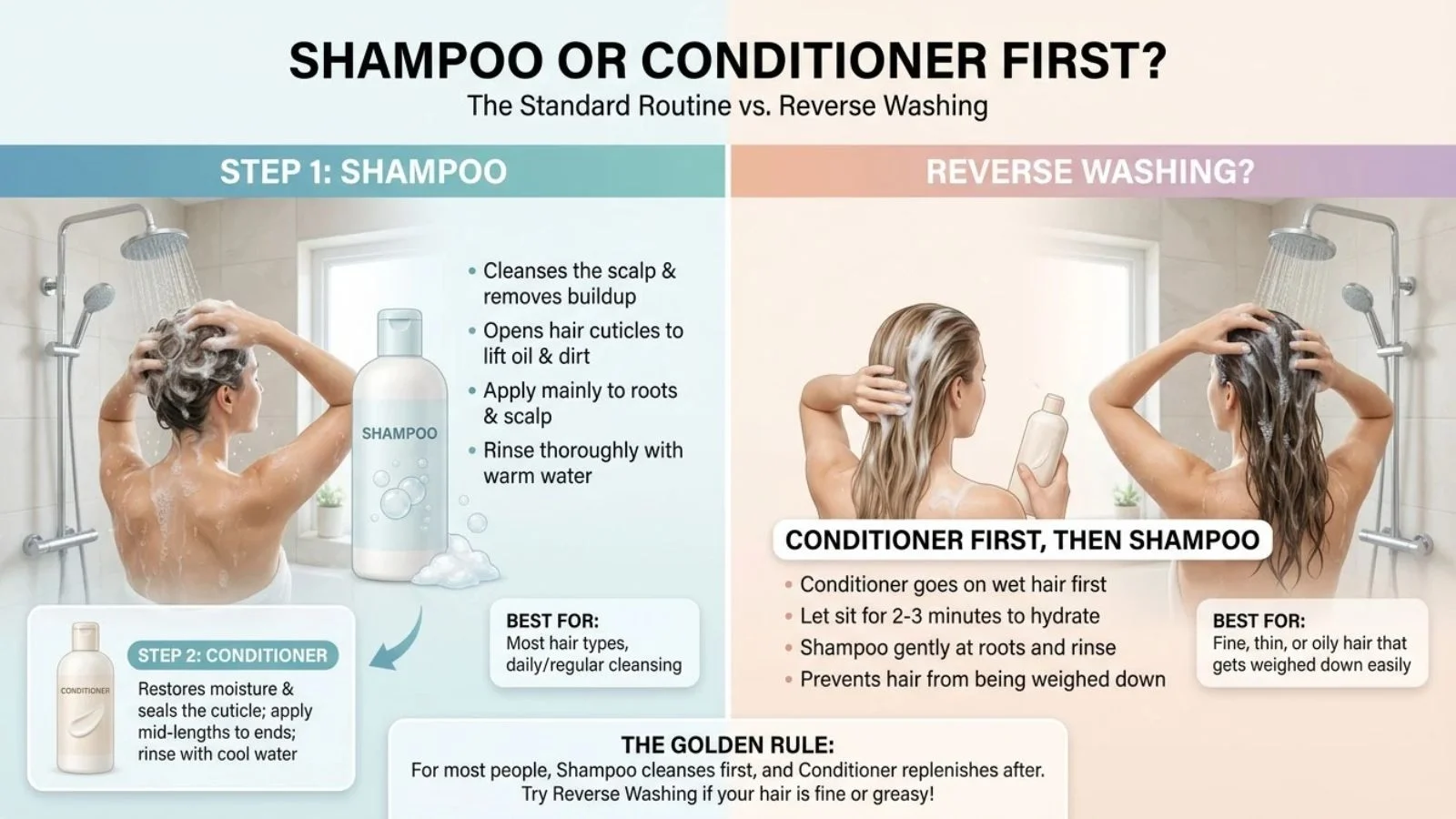
For most people, the correct order is simple: use shampoo first and conditioner second. Shampoo cleans your scalp and hair by removing oil, sweat, dirt, and product buildup.
Conditioner comes next to add moisture, reduce tangles, and make your hair easier to manage.
However, some people follow a different method called reverse hair washing. This method uses conditioner before shampoo and may work well for people with fine or easily weighed-down hair.
Shampoo or Conditioner First – Quick Answer
The correct order for most hair types is shampoo first, then conditioner.
Each product has a different job.
- Shampoo: Cleans your scalp and removes dirt, sweat, oil, and buildup.
- Conditioner: Adds moisture, smooths the hair, reduces tangles, and helps protect the hair surface.
Here is a simple example:
- Wet your hair with warm water.
- Apply shampoo to your scalp.
- Massage gently with your fingertips.
- Rinse the shampoo completely.
- Apply conditioner to the middle and ends of your hair.
- Leave it on as directed on the bottle.
- Rinse well.
This is the standard hair-washing routine for most people.
However, there is another method called reverse washing. It means applying conditioner before shampoo. Some people with fine or oily hair prefer this method because it may help reduce the heavy feeling that some conditioners leave behind.
The Origin of Shampoo or Conditioner First
The question of whether to use shampoo or conditioner first became popular as hair care products developed.
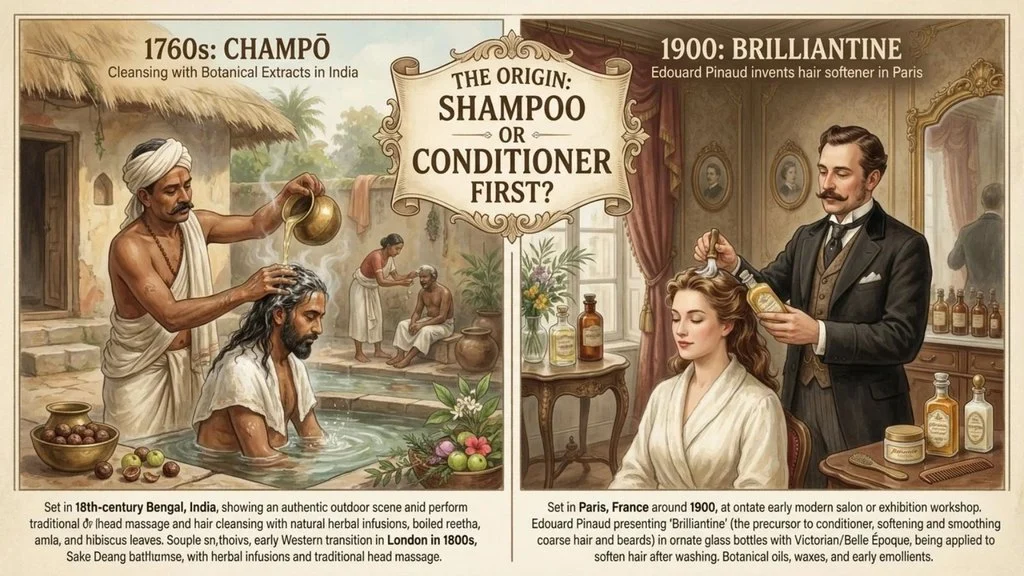
People have cleaned their hair for thousands of years. In the past, they used natural ingredients such as herbs, oils, and plant extracts. Modern shampoo and conditioner became common much later.
The word shampoo comes from the Hindi word chāmpo, which means to massage or press. It became part of the English language during the colonial period in India.
The word conditioner comes from the English word condition. In hair care, it describes a product that helps improve the feel and appearance of hair.
At first, shampoo was mainly used to clean the hair. Later, conditioners became popular because washing could leave hair feeling dry or tangled.
Today, both products are important parts of many hair care routines. Their order depends on their purpose: shampoo cleans first, while conditioner helps soften and smooth the hair afterward.
British English vs American English Spelling
The words shampoo and conditioner have the same spelling in British English and American English.
There is no spelling difference between these two countries for either word.
The difference is mainly found in other hair care terms, such as color and colour.
Here is a simple comparison:
| Word or Phrase | American English | British English |
| Shampoo | Shampoo | Shampoo |
| Conditioner | Conditioner | Conditioner |
| Hair color | Hair color | Hair colour |
| Hair care | Hair care | Hair care |
| Moisturizer | Moisturizer | Moisturiser |
| Organize | Organize | Organise |
| Favorite | Favorite | Favourite |
Why Do These Differences Exist?
American and British English developed different spelling habits over time.
American English often uses shorter spellings, such as color and organize. British English often keeps spellings such as colour and organise.
However, shampoo and conditioner remain the same in both forms of English.
For example:
- American English: Should I use shampoo or conditioner first?
- British English: Should I use shampoo or conditioner first?
Both sentences are correct.
Which Spelling Should You Use?
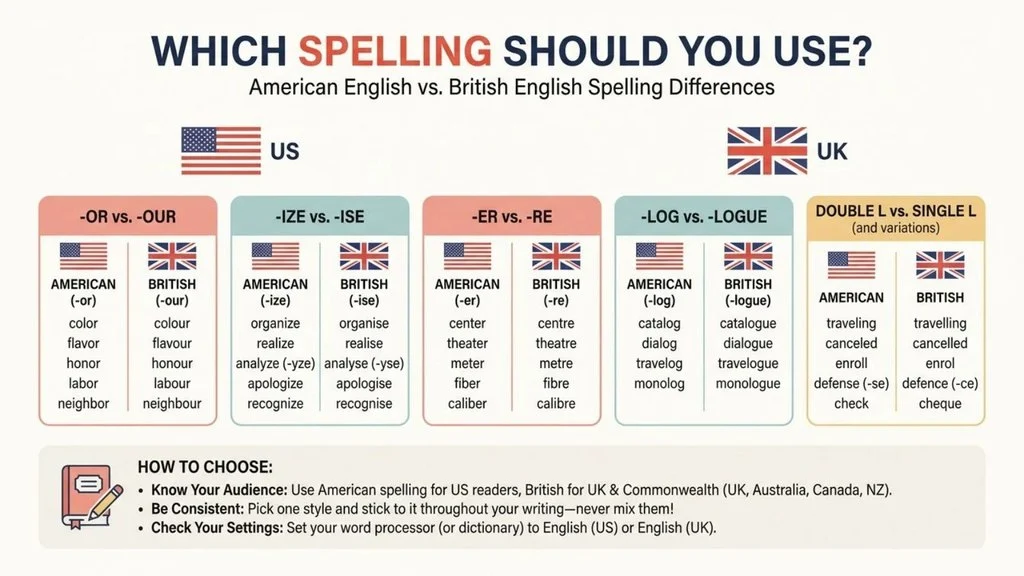
Since shampoo and conditioner have the same spelling in American and British English, you do not need to choose between two versions.
However, your writing style should match your audience.
For American Readers
Use American English spelling in related words.
Example:
“Should you use shampoo or conditioner first for better hair care?”
For British Readers
Use British English spelling where differences exist.
Example:
“Should you use shampoo or conditioner first for better hair care?”
For UK and Commonwealth Readers
Countries such as the UK, Australia, and New Zealand commonly use British English spelling conventions.
You can use the same shampoo and conditioner spelling without making changes.
For a Global Audience
Use simple and clear English.
Avoid mixing American and British spelling in the same article. Keep your language consistent so readers can understand your message easily.
Professional advice: Focus on clear information rather than changing the spelling of words that are already the same.
Common Mistakes with Shampoo or Conditioner First
Many people make simple mistakes when washing their hair. These mistakes can affect how their hair looks and feels.
Here are some common errors and how to avoid them.
1. Using Conditioner Before Shampoo Every Time
Most people should use shampoo before conditioner.
Using conditioner first is not wrong, but it is a different method called reverse washing. It may suit some hair types better than others.
2. Applying Shampoo to Hair Ends
Shampoo should mainly be applied to the scalp.
The ends of your hair are usually older and more likely to be dry. Let the shampoo rinse through them instead of scrubbing them hard.
3. Applying Conditioner to the Scalp
Many regular conditioners work best on the middle and ends of your hair.
Applying too much conditioner to the scalp may make fine or oily hair feel heavy.
4. Using Too Much Shampoo
Using more shampoo does not always make your hair cleaner.
Start with a small amount. Add more only if needed.
5. Not Rinsing Properly
Leaving too much shampoo or conditioner in your hair can cause buildup or make it feel greasy.
Rinse both products well.
6. Choosing the Wrong Products
Different hair types need different products.
For example:
- Dry hair may benefit from a moisturizing conditioner.
- Fine hair may need a lightweight conditioner.
- Curly hair may benefit from products made for curls.
- Oily hair may need a suitable shampoo for scalp cleansing.
7. Washing Hair Too Often
Washing your hair every day is not necessary for everyone.
Your washing schedule depends on your scalp, hair type, activity, and personal needs.
Shampoo or Conditioner First in Everyday Examples
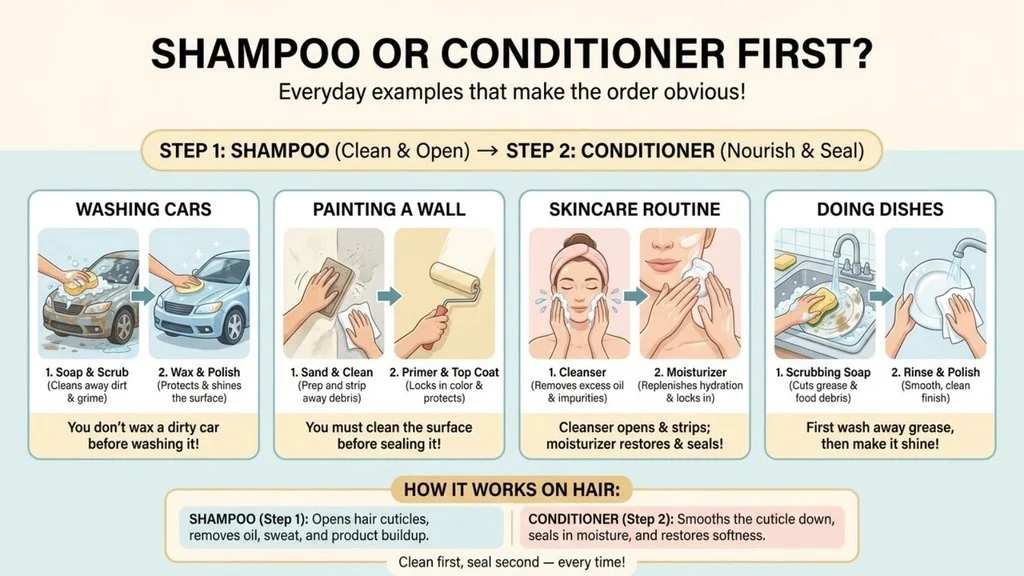
The phrase “Shampoo or Conditioner First” appears in everyday conversations, beauty blogs, product reviews, and professional hair care advice.
Here are some examples.
1. In Emails
You may use this question when asking a hair care expert for advice.
Example:
“Hello, I would like to know whether shampoo or conditioner should come first in my hair care routine. Could you please recommend the best order for my hair type?”
2. In News Articles
Beauty and lifestyle websites often discuss hair care routines.
Example:
“Experts explain why shampoo should usually come before conditioner during a regular hair-washing routine.”
3. On Social Media
People often ask hair care questions on platforms such as Instagram, TikTok, and Facebook.
Example:
“Quick question! Do you use shampoo or conditioner first? Share your hair-washing routine!”
4. In Formal Writing
The phrase can also appear in beauty guides, research-based articles, and educational content.
Example:
“Shampoo is generally applied before conditioner because the two products perform different functions in a standard hair care routine.”
5. In Everyday Conversations
Friends and family may ask each other simple hair care questions.
Example:
“Do you put shampoo or conditioner first when you wash your hair?”
These examples show how the phrase works in different situations.
Shampoo or Conditioner First Google Trends & Usage Data
The search phrase “Shampoo or Conditioner First” reflects a common question about personal care and hair washing.
People search for this topic because they want to understand the correct order of products and improve their hair care routine.
However, search interest can change depending on the country, season, beauty trends, and social media discussions.
1. United States
People in the United States often search for hair care advice, product comparisons, and washing routines.
Common related searches include:
- Shampoo or conditioner first?
- How often should you shampoo?
- Best shampoo for dry hair
- How to use conditioner correctly
2. United Kingdom
British readers also search for hair care tips and product advice.
Related topics include:
- Shampoo before conditioner
- Best conditioner for damaged hair
- How to wash your hair properly
3. Canada
Canadian searches often include questions about dry hair, scalp care, and seasonal hair problems.
Cold weather can make hair feel dry, which may increase interest in moisturizing products.
4. Australia
Australian readers often look for hair care advice related to sun exposure, dryness, and product selection.
Shampoo and conditioner routines are common topics in beauty content.
5. Worldwide Searches
People around the world search for this topic because shampoo and conditioner are widely used hair care products.
Search interest may also increase when beauty creators discuss new washing methods, including reverse hair washing.
Note: These are general search-interest observations, not verified Google Trends rankings or numerical search-volume statistics. For actual country comparisons and popularity over time, visit Google Trends.
Shampoo vs Conditioner Key Differences
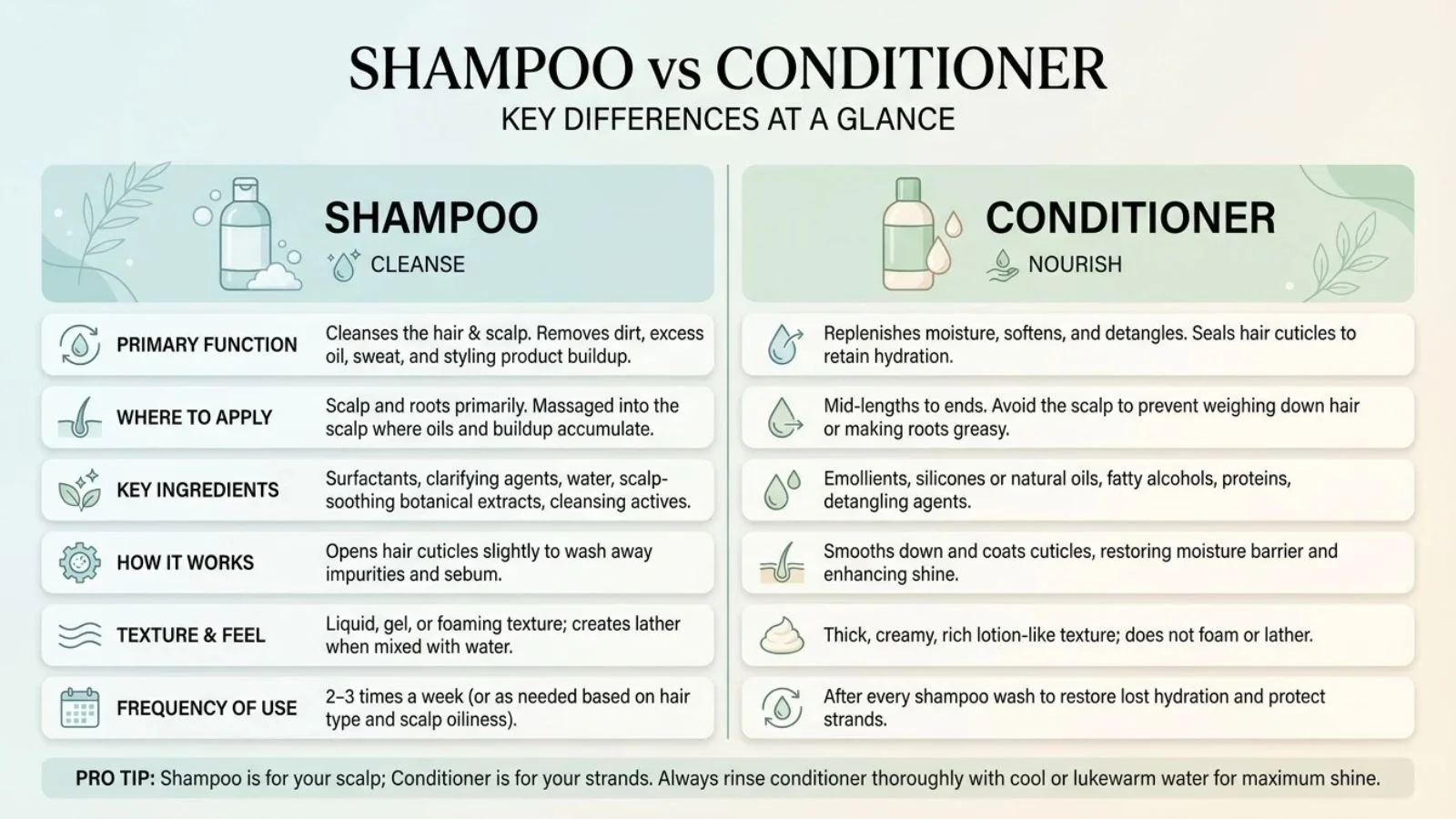
Although shampoo and conditioner are used together, they have different purposes.
| Feature | Shampoo | Conditioner |
| Main purpose | Cleans hair and scalp | Softens and smooths hair |
| Removes dirt | Yes | Not its main purpose |
| Removes excess oil | Yes | No |
| Adds softness | Not its main purpose | Yes |
| Helps with tangles | Limited | Yes |
| Best application area | Mainly scalp | Mainly middle and ends |
| Normal order | First | Second |
Which Product Is More Important?
Both products have different jobs.
Shampoo helps clean your scalp, while conditioner helps improve the feel and manageability of your hair.
Using both correctly can help create a balanced hair care routine.
Can You Use Conditioner Before Shampoo?
Yes! You can use conditioner before shampoo if you prefer a method called reverse hair washing.
In this method, you apply conditioner first and shampoo afterward.
Some people use this method because regular conditioner can make fine hair feel heavy. Reverse washing may help their hair feel lighter.
However, it is not necessary for everyone.
Who May Benefit from Reverse Washing?
- People with fine hair.
- People whose hair feels weighed down by conditioner.
- People who prefer a lighter hair finish.
- People who want to experiment with their washing routine.
Who Should Use the Regular Method?
People with dry, thick, curly, or damaged hair may prefer the traditional shampoo-first method.
However, the best routine depends on your hair’s needs and the products you use.
FAQs About Shampoo or Conditioner First
1. Should You Use Shampoo or Conditioner First?
You should usually use shampoo first and conditioner second. Shampoo cleans your scalp and hair, while conditioner helps soften and smooth your hair.
2. Can I Use Conditioner Without Shampoo?
Yes. You can use conditioner without shampoo, especially if your hair needs extra moisture. However, conditioner does not replace shampoo for cleaning your scalp.
3. Is It Better to Condition Before Shampoo?
It can work for some people, especially those with fine hair that becomes weighed down by conditioner. This method is called reverse washing.
4. Should I Apply Shampoo to My Scalp or Hair Ends?
Apply shampoo mainly to your scalp. Gently massage it with your fingertips and avoid scrubbing your hair ends too roughly.
5. Should Conditioner Touch My Scalp?
Most regular conditioners should be applied mainly to the middle and ends of your hair. However, some products are specially designed for scalp use, so follow their instructions.
6. How Long Should I Leave Conditioner in My Hair?
Most regular conditioners need only a few minutes. Check the product label because different formulas have different instructions.
7. Can I Shampoo and Condition My Hair Every Day?
It depends on your hair and scalp. Some people need frequent washing, while others benefit from washing less often. Choose a routine that keeps your scalp comfortable and your hair manageable.
Conclusion
Understanding whether to use shampoo or conditioner first can make your hair care routine easier.
For most people, the best order is simple: shampoo first and conditioner second. Shampoo removes dirt, sweat, excess oil, and product buildup, while conditioner helps soften hair, reduce tangles, and improve manageability.
However, reverse washing is another option. It involves applying conditioner before shampoo and may suit people with fine hair that feels heavy after regular conditioning.
The best method depends on your hair type, scalp condition, and personal needs.
Remember to choose products that match your hair, apply shampoo mainly to your scalp, and use conditioner on the middle and ends. Always follow the instructions on your products for the best results.

I am Ethan Whitmore is the founder and lead writer of Grammlii.com, passionate about exploring meanings, language, literature, and insightful ideas. Through well-researched and engaging content, he helps readers discover the deeper significance behind words, expressions, and everyday concepts.